Showing posts with label social partnership. Show all posts

Thursday, 31 December 2020

2020 VISION OF CAPITALIST CLASS WAR: build workers’ struggle, solidarity and socialism


Storm clouds are gathering as we turn our backs on 2020 and face the struggles of the rest of the 2020s.

Several groups of workers are flexing their muscles, threatening to fight back against the multiple tributes being hacked out of their jobs, wages and everyday conditions by the obscenely rich elite, to pay for the crises of 2020.

As we reflect on the past year and prepare for the next, nobody should harbour any doubt that class war is raging in the boardrooms of big business.

Employers and governments work in tandem to unleash a massive redistribution of wealth to the rich from the rest of us, with claims this is unavoidable to balance the books after a year of unprecedented state expenditure. And they plan to use Brexit to rob us further.

In battling to defend every penny of workers’ pay, every job and public service, it is necessary to see the bigger picture, to build the widest possible solidarity action in reply.

The past year has given us ‘2020 vision’ of capitalism in all its ruthlessly exploitative nature.

The globalised hunt for ever-greater profit and new capitalist markets has invaded wilder parts of our planet, bringing humans into contact with lethal pathogens, unleashing global pandemics with increased frequency and ferocity - in particular COVID-19, the worst killer pandemic in a century.

Decades of austerity cuts - better described as planned poverty, in pursuit of even more grotesque wealth for a tiny minority - led to entirely avoidable human carnage, with shortages in the NHS and failure to provide protective equipment or safe conditions in care homes and countless other workplaces the most obvious examples.

As 2020 wore on, more and more people spotted the glaring contradiction between rhetoric and reality; between mantras of “We’re All In This Together” and the brutal expansion of inequality.

In just three months the planet's billionaires increased their wealth by 27%, whilst workers on furlough suffered 20% pay cuts, and a record 370,000 others a full 100% loss of earnings from August-October alone, as they were chucked on the scrapheap of unemployment.

Amazon owner Jeff Bezos increased his personal wealth by $87billion since January, equivalent to the entire, combined NHS budgets for the whole of the UK.

The government propaganda nonsense about treating the Coronavirus like a war prompts one picture they would rather hide from us; as with wars, the pandemic has led to further polarisation of wealth, including increased monopolization of ownership.

That is plain to see in the retail sector, the second biggest employer in the country after the NHS. Retail giants like JD Sports and Mike Ashley's Fraser Group battle over who picks up the spoils as Arcadia, Debenhams and countless small firms go to the wall. Big retail thrives, the High Street turns into a wasteland.


Handouts to Big Business

Government policies in response to the pandemic were shaped by the clash of two opposite class interests.

The furlough scheme was the result both of demands by the trade union movement and socialists to protect workers in their jobs, and the fear and loathing of collapsed profits by big business.

Still, it was primarily huge handouts for the capitalist rich and horrendous insecurity for workers. For example, supermarkets got state handouts of £1.9billion in business tax relief, which they converted into handouts of £1.3billion in dividend payments to shareholders and 230,000 redundancy notices this year to retail workers - whose efforts on the front line not only fed the people but fed the profits of the big four supermarkets and their likes.


It's Capitalism to Blame – not just COVID-19

In fighting to shape the future in the interests of the vast working-class majority of the population, we need to be crystal clear it was not the pandemic which created the crisis of job insecurity, pay cuts and threats to essential services, but the capitalist system itself. The pandemic simply exacerbated the crisis.

Pre-pandemic Britain witnessed an incredible 54% rise in the number of people suffering not just poverty, but destitution, between 2017 and 2019. The number of kids condemned to destitution in their formative years rose by 50% in the same two years.

The ultimate indictment of capitalism must be the fact that in the fifth-richest economy on Earth, UNICEF has been obliged to give a grant for breakfast boxes to feed hungry children in South London on Christmas Day; the first such emergency aid to the UK since UNICEF’s foundation in 1946.

Bosses Unleash Class War

As we step into 2021 it is no longer adequate to predict a ruthless crusade by employers and their hired politicians to claw back the costs of 2020 from workers’ pockets; it’s happening already! It requires at least equal determination to defend the class interests of the millions as is on display by the millionaires in their own self-interest.

Patterns are emerging of systematic pay cuts; ‘fire and rehire’ schemes; reductions in sick benefits, terms and conditions; reduced hours of available work, and a slaughter of jobs.

And as Karl Marx identified over 150 years ago, burgeoning unemployment - and indeed underemployment - are being used to bludgeon workers into accepting lesser pay and conditions, with the age-old, obnoxious declaration “You’re lucky to have a job!”


The Struggle Determines the Outcome

Workers in a range of sectors are limbering up for crucial defensive struggles: in BT, Scottish Gas, further education colleges, ScotRail, CalMac ferries, the NHS and wider public sector, etc.

They face the choice of fighting back or being crushed by pay cuts; jobs downgrading: the corporate thuggery of ‘fire and rehire'; decimation of jobs – and the immediate, ongoing threats to health and safety in the workplace, as employers prioritise profit over lives amidst new waves and strains of the killer COVID-19.

There is nothing predetermined in the outcomes of these struggles.

But some things are certain: the employers are out to use the twin viruses of COVID-19 and capitalist recession to beat down workers’ wages, conditions and jobs; to beat workers down onto their knees.

Unless we get up off our knees and fight back with maximum solidarity across sectoral and Union boundaries then working-class people will pay a terrible price at the hands of class enemies who sing hymns of national unity and “We’re All In This Together” as they seek to divide and conquer.


Defeat Divide-and-Rule Tactics

The Tories announced a public sector pay freeze with mock concern at the pay cuts in the private sector, with Rishi Sunak trying to appear sincere when he said: “This means we cannot possibly justify public sector pay rises.”

But they've taken their divide-and-rule trickery even further, trying to split different sections of public sector workers, promising pay rises to at least some NHS staff but not the millions of frontline workers in local government, civil service departments and others who also kept society functioning during COVID-19.

The Scottish government is a bit more cute about this, announcing a £500 award to health and care workers (which of course the Tories insist is taxable!). But that one-off payment still excludes hundreds of thousands of other key workers in Scotland, and should also not be allowed to distract from the entirely justified demands for a 15% pay increase for all NHS staff, which the Scottish government has given no indication of supporting or funding.


£12 Minimum Wage at 16

One of the weapons which SSP trade unionists are determined to popularise in combating the divisive tactics of employers and governments is the demand - first raised by the Scottish TUC during the spring lockdown - for an immediate £2-an-hour pay rise for every key worker, regardless of occupation.

This is an extremely modest but unifying demand in recognition both of the heroic efforts of workers in the NHS, care sector, retail, postal services, bin collections, utilities, council and civil services, and countless others - and of the fact those workers who society most relies upon are usually also the lowest paid.

However, as we explained back on 1st April, it’s not just ‘Time £2 Pay All Key Workers’ (to quote the STUC) but this needs to be underpinned by a legally enforced National Minimum Wage of at least £12-an-hour from the age of 16 upwards, if we are to avoid further divisions between different low-paid workers, and overcome the rampant poverty which also undermines job security - because workers cannot afford to buy the goods or services produced by other workers.


Workers’ Solidarity and Socialism – not ‘Social Partnership’ With the Enemy

Solidarity in action is a critical plank of what’s required in 2021.

Socialists and trade unionists need to challenge and defeat the false and dangerous philosophy which pervades the upper echelons of most trade unions; namely that of ‘Social Partnership’ between union leaders and company chief executives.

The ‘2020 vision’ of capitalism revealed to millions of people surely exposes the idea of common interests between the very rich and the rest of us, the employers and the working class, as a preposterous, dangerous nonsense.

It took courageous struggle - including strike action in many cases, and even a preparedness by union shop stewards to put their job on the line - to even win adequate sick pay or Personal Protective Equipment from employers who put privatised profit before people’s lives.

And the Tories have gone from hypocritical claps to slaps in the face for key workers, as they prepare to pick the pockets of the very people they proclaimed heroes when it suited the government to get them to work in the jaws of death.

Collective action, good old-fashioned working-class solidarity applied to the modern age, is what’s required, not cosying up to company bosses who would cut your throat as quick as they'd look at you in defence of their profit margins.


Workers Need Socialist Party – join the SSP

Going beyond that, one of the clearest lessons of the past year is that in order to end the rule of the rich in a society based on class division and class exploitation, workers need a conscious socialist party rooted in the workplaces and communities.

A workers’party with a socialist vision and ideology - turned into fighting socialist policies capable of mobilising masses of people because they are expressed in the language and needs of the working class.

The SSP enters 2021 determined to help build a socialist force in the unions, workplaces and communities that can link immediate battles over jobs, wages and rights at work with the need to take the likes of energy, construction, transport, all public services and banks into democratic public ownership. As the foundation for a Socialist Green Recovery Plan which could build 100,000 eco-friendly homes; establish an integrated, free public transport network; provide cheap green energy to all; construct universal basic services fit for the 21st century; thereby also creating at least 150,000 well-paid, unionised jobs and apprenticeships, guaranteeing meaningful work and security to the next generation in a socialist Scotland.

Look back in anger at capitalist 2020, but look forward with determination to shape a socialist future in the 2020s.


Join the SSP (scottishsocialistparty.org)


Saturday, 31 December 2016

FACTORY SIT-IN VICTORY: when Glacier Metal workers beat multi-national


Twenty years ago today, on Hogmanay 1996, the Glasgow Glacier Metal engineering workers were ringing the bells in elation at their victory, whilst Glacier bosses were wringing their hands in despair.

The ‘Polmadie 103’ had scored a landmark victory for class struggle trade unionism, defeating the factory’s multinational owners, Turner & Newall, after a seven week factory sit-in.

It was the first workplace occupation in ten years, and was provoked by dictatorial bosses trying to impose a 15-point change of contract, which aimed to double company profits; cut wages by £123 a week; and slash sick pay, the canteen subsidy and other benefits won over 25 years by these members of the AEEU, now part of UNITE the union.

The boss’s method of imposing this was designed to undermine the union. He picked on the youngest tradesman in the workforce, and ordered him to risk health and safety by doing two jobs at once. The lad went to his union stewards, who had prepared for this confrontation and - advising the entire workforce to ‘down tools’- went upstairs to negotiate.

As they waited outside his office, the manager sneaked down to the factory floor to declare: “Gentlemen, you are all sacked!" 
Four of those sacked were on holiday, while another was convalescing after operations for brain tumours. 

Advantages of Factory Occupation  
Critically, instead of walking out the door on strike - which years before had landed them in a prolonged lockout - the workers stayed in the factory, declaring themselves available for work.

This totally wrong-footed management, and gave the highly-skilled workers several strategic advantages.
They seized control of a factory with £1million-worth of undelivered precision engineering products, paralysing £200,000-a-day production and thereby putting pressure on the owners from customer companies. I'll never forget the irate phone call to the factory during the sit-in, when a company boss bellowed: "What's going on with my orders? I've got a f***ing nuclear power station to run!"

They psychologically brought the battle into the bosses’ domain, preventing them bussing in scabs past legally-hamstrung pickets with police assistance, as Timex had done in Dundee 1993.
And above all, they were fighting for their jobs, justice and full trade union rights inside a well-heated factory, with snow-storms outside, making it one huge campaigning nerve centre.

Building Workers' Solidarity  
If the factory occupation had remained a ‘folded arms’ affair, waiting for concessions from the employers, it would have collapsed, or at best allowed some dirty deal to be hatched above their heads between the management and top AEEU officials, who had secret contact with the company as early as five days into the occupation.
But this inspiring workers’ struggle was a model of strategy and tactics. Firm discipline was established by the union stewards and Occupation Committee, with a booze ban and daily mass meetings. Meals were cooked and the factory kept clean.

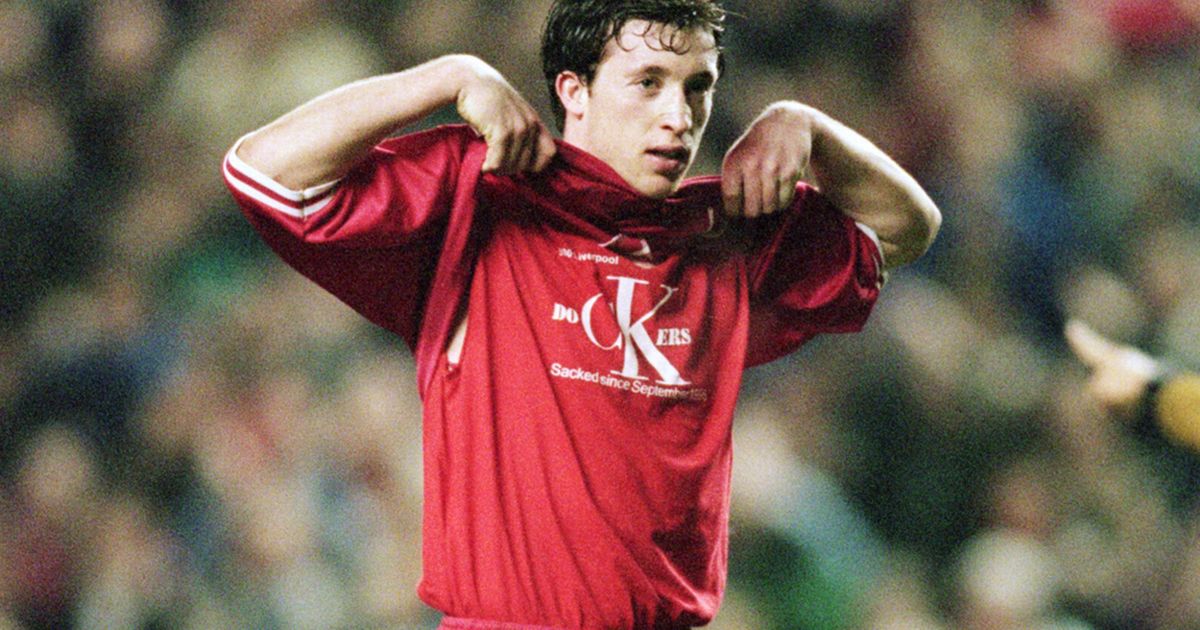
LFC hero Robbie Fowler showing solidarity with
the dockers' fight against cheap casual labour


Role of Socialists in the Sit-in 
Some of us who later founded the SSP played a major role in this historic event.

I first called to offer practical solidarity the morning after they started the occupation. We had been in the thick of building support for the 500 locked-out Liverpool dockers for the previous 15 months, and used our vast array of workplace contacts to arrange solidarity visits with Glacier workers all over Scotland – and parts of the UK, particularly those with big engineering industries.
This served several purposes, including financial survival for the workers’ families and a breach in the media shroud of silence.

On the issue of whether management could evict them, we explained the law, with the help of a couple of friendly lawyers, but emphasised that the ultimate means of defence of the sit-in from potential moves - involving police, or cowboy security firms - was to build mass support in the workplaces and surrounding community, creating a potential army of defence.

Solidarity Mass Pickets  
The employers hoped to isolate the sit-in with the help of media silence, aiming to starve the workers’ families into submission as Christmas loomed large. Workplace solidarity tours helped scupper that. It also countered the danger of boredom and demoralisation setting in amongst a workforce not previously known for involvement in the wider trade union movement.

When management told the arbitration service ACAS that they had no workforce, we smelt a rat, suspecting imminent eviction, and in discussions with the Occupation Committee suggested an early morning solidarity mass picket, built through a leaflet around workplaces and the mailing list of the Clydeside Dockers' Support Group (which I was the organiser of). That vastly boosted morale, became a weekly feature, and peaked at a turnout of 400.

Taking to the Streets 
We then suggested a pre-Xmas demo, which attracted well over 1,000 on Sunday 15 December. One report claimed 3,000.
The build-up was as important as this stirring event itself. The Occupation Committee had co-opted me as an adviser, and put me in charge of a small Demo Committee. We involved the absolute majority of the men, and a few of their partners, in street meetings, issuing hard-hitting leaflets that won support, by-passed the media blackout, and swamped workplaces and shopping centres across the west of Scotland.

An ACAS boss complained after a leaflet was left unwittingly on his windscreen, because it described Turner & Newall as ‘notorious merchants of death’, citing their appalling record on asbestosis. AEEU officials went ape-shit down the phone to the union convener, who firmly rejected their instructions and printed 29,000 of the ‘offending’ leaflet. This propaganda offensive helped bring T&N bosses to heel, as they already faced dire problems with £billions of outstanding asbestosis claims and feared their notoriety being broadcast.

Mass meeting of the locked-out Liverpool dockers


Supporting Locked-out Liverpool Dockers  
The workers were literally dancing with elation after the success of the demo. They then turned their attention to daily street collections in the run up to Xmas – for financial survival, but also to keep the campaign alive and in people’s minds.

The first big collection, on 18 December, raised £488… for the Liverpool dockers! The Occupation Committee rounded it up to £600, in an act of selfless solidarity born of their own experiences in battle. On Xmas Eve, a team hit Glasgow’s Argyle Street from 10am to 5pm and collected £2,800.

Negotiations began that day, involving both full-time union officials and the factory union convener and deputy convener. T&N’s Head of Employee Relations grizzled with rage that as they negotiated, Glacier workers were on the streets with megaphones and leaflets attacking T&N. That was precisely part of the point – to pile pressure on the company, and remind right-wing AEEU officials what was at stake.

A Christmas day breakfast was laid on in the occupied factory for families and supporters – another ingenious act of defiance and comradeship by people whose talents erupted in the heat of battle. 

Outright Victory! 
By Hogmanay, the 103 workers were celebrating a landmark victory. All were reinstated, with full union recognition, and very little conceded to the bosses on their conditions of work.
In a final fling at undermining union rights, the company tried to get a staggered return to work – which the AEEU full-time officials agreed to. The workers’ direct union representatives went ballistic, refused, said it was a ploy to potentially victimise leaders of the occupation, and won a proud, united return to work.

A multinational giant was brought to its knees by the tactics, skills, and impact on production by this factory occupation. Socialists played an important, constructive part, applying collective experience to living struggles, laying foundations for a united, working class socialist party - in the form of the SSP, established two years after the Polmadie 103's victory. 

Capitalists Complain! 
Such was the impact of this victorious struggle in the Southside of Glasgow, that a dissident voice in the hierarchy of Turner & Newall management reproduced the article I wrote on its tenth anniversary, with a covering note bemoaning their losses.

"Even if they worked only 5 days per week, at “£200,000-a-day” this 7-week strike cost them £7 million, plus legal and administrative costs of fighting the strike. And they lost not only the strike but their former stronger position against the union.
Here’s an exquisite example of why [former Glacier Metal Company CEO] Wilfred Brown’s ideas about Works Councils make management stronger, not weaker. Had Turner & Newall had the guts to restore this strong institution — instead of the cowardice of underhanded union-busting — they would have been in a stronger position overall in their discussion with the union."

Interestingly, he advocated a return to earlier methods of Works Councils - the much-vaunted concept of 'social partnership' - rather than full-frontal union-busting methods... to achieve precisely the same cost-cutting, profit-boosting attacks on workers' terms and conditions!

As workplace closures and massive redundancies erupt 20 years on, workers and their union leaderships should study, adapt and apply the lessons from this outstanding model of how to defy the dictatorship of capital.


Tuesday, 29 September 2015

SOCIAL PARTNERSHIP: PITFALLS AND TRAPS FOR WORKERS


As the Tories take a claw hammer to workers' rights, and swing their wrecking ball at jobs, wages, tax credits and public services, it's no wonder workers search for a political alternative. 
The cream of the Scottish working class has joined the SSP, the socialist contingent of the 630,000-strong trade union movement. They are rightly attracted by the SSP's track record of solidarity with workers in struggle; unflinching fight for an immediate £10 minimum wage for all at 16; our advocacy of democratic public ownership, and our tireless campaigning for a charter of workers' rights, as a core human right.
But given their near-monopoly of Scottish politics since the Referendum, and the power they wield, thousands of trade unionists and workers see the SNP as an immediate vehicle for their aspirations. 

SNP TUG
The SNP claims that within its overall, phenomenal growth to about 112,000 members, their Trade Union Group (TUG) has rocketed from 800 to 16,000 - at least up until the Corbyn factor, outnumbering the entire membership of Scottish Labour. 
Some have joined the SNP TUG under the false impression that it's an actual union, such is their disenchantment with their own trade union. 
Others purely because they see the SNP as the big vehicle to climb aboard for independence, and tick the box to register as a trade union member. 
Others still, doubtless attracted by the SNP's mood music towards the trade union movement - in technicolour contrast to the savage hostility of the class war launched on the unions by the Tories, and the decades of neglect and abuse of workers' loyalty by Labour.
But what does the SNP actually offer workers? What does their very welcome talk of inclusion of the unions amount to? What does their oft-trumpeted belief in 'Social Partnership' mean in practice?

SNP WHITE PAPER PROPOSALS 
One of the most comprehensive statements of SNP policy on the unions and workers' rights was carried in the November 2013 SNP government White Paper, 'Scotland's Future'. 
It promised, given the powers of independence, to "reverse recent changes introduced at Westminster which reduce key aspects of workers' rights. For example, we will restore a 90-day consultation period on redundancies affecting 100 or more employees." And to abolish the pernicious 'shares for rights' scheme, whereby workers were given a few piddling shares as reward for selling all their rights on redundancy, unfair dismissal, etc.
Very welcome, considering the jailhouse conditions endured under the Tories. But never a single mention from this voluminous SNP document of fully repealing the bulging package of anti-union laws ushered in by Thatcher, retained by Blair and Brown, now being made infinitely more repressive by Cameron's dictatorship. 

NO PLEDGE TO REPEAL
Nor have the SNP pledged repeal before or since the Referendum. For instance, to their full credit, they have argued and voted against the current Tory Trade Union Bill - but still never once promised to repeal the batch of repressive legislation that the Bill is being riveted onto. Even in the scenario of an SNP government with full control over employment law, that implies the retention of at least the majority of the most repressive anti-union laws in the entire western world.
The SNP Trade Union Group is undoubtedly on the left flank of the SNP. It has submitted Motions to the forthcoming SNP conference calling for opposition to the Trade Union Bill, an outright ban on fracking (rather than just a moratorium) and for a public inquiry into blacklisting of trade unionists in Scotland. But even they don't explicitly call for total repeal of the vicious anti-worker laws. 

SNP 'SOCIAL PARTNERSHIP'
The core philosophy of the SNP is 'Social Partnership'. In the White Paper they spelled it out: "working directly with the trade unions, employers' associations, employers and voluntary sector to build a partnership approach to addressing labour market challenges". 

But the fundamental feature of a capitalist society - with private ownership and the profit motive pivotal - is that the interests of workers and capitalist employers do not coincide. They clash, in what at root is a struggle over who gets the bigger share of the wealth produced: workers in their wages, conditions and 'social wage', or owners in profit and shareholders' dividends. 
Any attempt at 'social partnership' within the framework of such a capitalist 'free-market' economy is not a partnership of equals, between two sets of people with common interests, but a partnership of the rider and the horse!

FLAWS REVEALED BY STRIKES 
This philosophy shows its inherent flaws when confronted by the concrete reality of workers being forced to fight back in self-defence and in opposition to attacks on the public services they provide. 
For example, when the SNP and its Trade Union Group were challenged to unequivocally side with the striking Dundee hospital porters and Glasgow Homeless Caseworkers - a challenge laid down by members of Trade Unionists for Independence, not by some opportunist Labour hacks - they writhed, wriggled and declined to declare open solidarity with the strikes. 
The SNP TUG were caught between their instincts as trade unionists and their loyalty to the philosophy of 'social partnership'; mangled up in the clash between workers seeking a fair and justified jobs regrading in both strikes, and the public sector employers involved, who are primarily funded by the SNP government.

CALMAC FERRIES 
The baleful consequences of 'social partnership' between trade unions and employers was even more starkly shown up in the recent CalMac ferries strike. 
When RMT members balloted and went on strike in defence of jobs, pensions and conditions in the face of a Scottish government tendering process likely to result in privatisation, the Scottish Socialist Party didn't hesitate to side with the ferry workers and organise support for them. In contrast, the SNP government tried to deny transferring the service to a private company (Serco) would be privatisation, and the SNP TUG squirmed with embarrassing verbal gymnastics about "recognizing the right to strike" and how the strikers were being met by SNP Ministers, but patently failed to unequivocally support the strike. This earned them the stern rebuke of the RMT - a union affiliated to no political party, after being expelled from Labour when they (temporarily) affiliated to the SSP over ten years ago.

RIDING TWO HORSES
So whilst individual SNP members in the unions will have supported the strikers mentioned above, the SNP as a party - and even its Trade Union Group - were prisoners of their own false belief in the common interests of workers and big employers, or of workers and the dictats of the capitalist European Union's directives on privatisation. 
Instead of defying such forces, the SNP tried to straddle two horses, as they charged off in opposite directions. 
In the case of the ferries strike, they only eventually intervened to concede promises on jobs and pensions after being forced to by the tenacity of an escalating strike which threatened to expose the hollowness of their 'social partnership'.

WORKER DIRECTORS
At its more general level, the SNP 'Social Partnership' model includes very seductive sounding proposals of 'worker directors' on company boards - emulating the various versions practiced by 14 out of 28 EU countries - with the White Paper favouring "employee representation to bolster long term decision-making and improve industrial relations."
Compared with the way unions have been cast out into the industrial Siberian steppes by successive Westminster governments, frozen out of all discussion and decisions, this looks like a warm, welcoming hearth fire.
But it's riddled with pitfalls and potential traps.

ATTRACTIONS 
If elected workers' representatives were given access to discussions on employers' plans, that would be a radical breakthrough compared, for instance, with the ruthless dictatorship of capital - in the form of one man! - on display in 2013 at Grangemouth. 
INEOS owner and boss Jim Ratcliffe held the entire Grangemouth workforce, and indeed the Scottish government and people to ransom, shutting down the biggest plant in the country to enforce his union-smashing plans.

If union reps had access to company secret accounts, that would be a huge advantage in protecting workers and communities from the shenanigans of the profiteers.

GAGGED AND BOUND
But in those other countries with 'worker directors', they are usually gagged from speaking about any company secrets, and frequently bound hand and foot to the majority decisions of the boards of directors they have a token place or two on. 
Close to home, that's the situation with so-called worker directors on NHS area boards. They are entirely compromised in the eyes of trade unionists.
And the example lauded in the SNP's White Paper - as a model of 'Worker Directors' enacting their 'social partnership' - was that of First Group, which has had a 'worker director' on its board since the firm's formation in 1989. 
Where the hell was this 'voice of workers' when RMT members on First Scotrail were compelled to stage strikes against savage attacks on their conditions a few years ago? 
I don't recall meeting him on the picket lines, nor hearing him side with the workers he claims to represent in the media. Nor condemning the revelations at the time that the SNP government had underwritten any losses to First Scotrail as a result of strike action. 
Is that what social partnership - and worker directors - amounts to?! 

NOTHING ORIGINAL 
The SNP's belief in Social Partnership is pleasant mood music to the ears of thousands of workers expelled into the wilderness by employers and governments hell-bent on slashing jobs, wages, conditions and public services. 
But it's anything but original, and a slippery road to setbacks for workers and working class communities, which the likes of the STUC would be wise to heed as they (quite rightly) engage with the SNP government and SNP MPs. 

'OLD' LABOUR'S SOCIAL CONTRACT
Back in the days of the 1974-9 Labour government - 'Old Labour', with a powerful trade union influence and sizeable socialist wing in the party - a previous version of this 'social partnership' notion was practiced. 
Called the Social Contract, it was initially popular amongst layers of the lowest-paid workers, as they gained reasonable pay rises in Phase I of this agreement between the tops of the unions, employers and the Wilson/Callaghan Labour government. 
But it faced its own inevitable doom, because whilst the government had the power to control (that is, suppress) workers' wages, it lacked the power to control prices in a capitalist market economy. 
So workers suffered ferocious pay cuts as inflation ripped through the roof; the (left) trade union architects of this Social Contract became discredited as they tried to stop members striking for compensatory pay increases; workers became bitter and confused; Labour was blamed and defeated; and the inglorious butcher of the working class, Maggie Thatcher, won office by default in 1979. 

SOUTH OF IRELAND
More recently, in the South of Ireland, as working people faced decimation to pay for the horrendous crises not of their making, the tops of the trade union movement entered a succession of 'National Agreements' - based on the same 'social partnership' model. This left workers hamstrung in their attempts to resist austerity measures, with jobs and incomes slaughtered on the altar of protecting profit margins and targets on cuts to public expenditure. 
So in contradiction to the seductive sounding alternative to red-in-tooth-and-claw Toryism, the SNP's 'social partnership' will fail to meet the aspirations of the very workers attracted to it right now. 

DEFY OR DESTROY
Under the hammer blows of cuts to the Scottish budget by Westminster, the SNP faces a harsh choice, a real test of whose side they're on: they'll have to either stand up and defy the Tory cuts, refuse to pass them on, and mobilize a mass rebellion of the Scottish people - to demand back the £billions stolen by Westminster - or they'll end up slashing jobs, wages and public services, whilst trying to devolve the blame to local councils, colleges and Health Boards. They'll have to choose to defy or destroy. 
The Tories' ideological crusade to slash the share of wealth going to workers through austerity and privatisation is irreconcilable with the needs of the working class majority population. 
To compromise with them would be to shatter the hopes of those who rejected them, including the masses of Scots who voted SNP. 
Social partnership is an attempt to paper over the chasm between the interests of the working class and the 1% who possess most of the wealth.

SOCIALIST DEMOCRACY 
Of course in an independent socialist Scotland - as fought for by the SSP - elected, accountable workers' representatives should be the majority on workplace committees to control day-to-day operations and conditions.
The majority on the boards of management of nationalized industries and services, and of local cooperatives, should be made up of working class representatives - elected, subject to recall, and paid the average skilled wage.
But that's on the basis of a society where the core of the economy is under democratic public ownership - a world apart from the present setup, where a handful of billionaires, bankers and hedge fund managers control the majority of the economy. 
A socialist Scotland would usher in genuine 'social partnership', where the workers in each industry or service, alongside the wider community, and elected local and national governments, could collaborate for the betterment of the entire population- not the narrow, selfish profit interests of a handful. 
That's the vision of the SSP; a starkly different picture to the SNP's 'social partnership'.