Showing posts with label trade union rights. Show all posts

Wednesday, 6 September 2017

McSTRIKE! - build the fight for £10now and a union


September 4th 2017 should go down in the history books as the start of a fight by a new generation of workers against poverty pay, insecure jobs, bullying, intimidation and lack of union rights. 

A very brave group of 40 McDonald's workers in Cambridge and Crayford, south east London, voted by a whopping 96% to strike, in the ballot conducted by their union, the Bakers, Food and Allied Workers Union (BFAWU). 

They defied management threats and victimisation - including slashed hours and sexual harassment - for daring to be in the union; walked out to form pickets, were joined by big crowds of supporters on rallies, plus 14 solidarity demos across the UK. 

Their core demand was for £10-an-hour and a union. 

They chose to strike on 4 September to coincide with US Labor Day, where fast food workers involved in the sweeping mass movement in the Fight for $15 went on strike, as did McDonald's workers in Belgium and elsewhere.
It was the start of global workers' action against global capitalism's totemic symbol - McD's - global casualisation and cheap labour. 

Starvation Wages 

The conditions these workers suffer, and are striking back against, are symptomatic of not just one of the world's biggest multinational corporations, but of the modern serfdom that 21st century capitalism relies on to turbocharge their profits. 

Tyrone is one of the Cambridge strikers. Aged 17, he's on £4.75 an hour. He describes working with the unbearable kitchen heat, the impatient queues, the aggro - but still forced to skimp meals through poverty pay; still unable to get a home of his own, sleeping on a punctured air bed in his mate's bedroom, wakening several times to pump it up again. 

His dream of winning £10-an-hour through the union and strike action is humbling in its modesty: "I could get a proper bed. I could get out of my mate's house. That's all I want, a place and a bed."

Tom, one of the union reps, is 24, and therefore on £7.55.  But he often skimps meals to save enough to visit his 4-year-old son, making do with the one free meal McD's allows him. This is the same corporation with the company line: "We have committed to investing in our people, to competitive rates of pay."

That's the problem; the government's paltry levels of minimum wage means they are often all too 'competitive' - in particular for younger workers, whom McDonald's and their ilk prey on for profit, because they're legally cheaper to hire, due to the lower legal youth minimum wages. 


Them and Us 

McDonald's methods encapsulate the whole system perfectly, grotesquely. 

Their own investment calculator reckons if you'd been able to buy 1,000 shares last December - when young Tyrone started with them - you'd have made £34,025 profit by now... whereas even if Tyrone had slaved in a hot kitchen full-time since he'd have earned only £7,410. 

Tom can barely afford to travel to see his toddler son, but McDonald's Chief Executive, Steve Easterbrook, has use of the company's private aircraft, and enjoys a package equivalent to £5,684 an hour!! 

They use zero hours contracts to wring maximum profit out of their 80,000 UK workers - and almost zero-rated corporation tax; well, a rate of 1.49%, to be accurate! They only promised to offer secure contracts, with guaranteed hours, in a state of panic after the strike ballot. And they've yet to put anything acceptable in writing. 

"I'll Tell You What It's All About!" 

As BFAWU Scottish Organiser Mark McHugh told the recent SSP public meeting in Govanhill, McDonald's were the first to introduce zero hours contracts to the UK, back in 1974! 

"It's taken this long to take them to task. I'll tell you what this strike is all about. It's about respect and dignity at work; the right to join a union; proper health and safety - not suffering burns and being told to take your break now, instead of getting treatment. It's about the right to join a union. About having the same right to go on holiday as anyone else. To actually get a shift when you turn up, not be sent home because it's quiet. 

We owe it to young people to win decent rights, because these retail park jobs are not stop gap jobs, they're what thousands face long-term. The food industry is booming, so they should be treated as serious jobs." 

From Acorns to Mighty Oaks 

It's to the eternal credit of these strikers, and their union, that they've taken serious, courageous action. For £10 and a union. For abolition of zero hours contracts and secure jobs. For an end to bullying and sexual harassment, both of which are rampant in these sectors: fast food, hospitality, retail. 

These are sectors bedeviled by the poverty pay and job insecurity that go with zero hours contracts like burgers go with chips. 

The strikes were a tiny proportion of the total workforce. But a similarity small section of McDonald's workers went on strike in New York City in November 2012, starting the Fight for $15, which through strikes and mass actions in the communities has now won big wage hikes for 22 million workers in the USA. 


£10 Now! 

The trade union movement needs a leadership that is serious about its own grand words and wishes. A long, torturous 3 years ago - September 2014 - the TUC congress voted unanimously for the BFAWU Motion for "a £10 minimum wage for all workers." 

Since then most union leaderships have done little - or literally nothing - to implement that demand. The BFAWU and some other union branches have campaigned for it - as has the Scottish Socialist Party, on the streets, in our unions, and as a demand we put to councils and the Scottish government to immediately introduce. 

And unlike even Labour's best, Jeremy Corbyn, the SSP wants £10 immediately, not three years hence, in 2020; in fact £10 is rapidly approaching its sell-by-date, given the inflation on daily necessities. 

Defend the Strikers

These McDonald's workers deserve a medal, but above all deserve the protection and solidarity of other workers and other unions. As the BFAWU President, Ian Hodson, told a strike rally,
"If even one striker is victimised for going on strike, we demand that others come to the McDonald's branch and occupy it." 

That's the militant spirit of defiance and class solidarity that pioneered the creation of the trade unions, especially amongst the most exploited sections of workers nearly 150 years ago. 

We owe it to the next generation to build on the courage of the first ever McStrikers in the UK, to fan the spark they lit into a flame that helps burn out the casualisation and super-exploitation faced by millions. 

The SSP pledges to play its part, alongside the BFAWU and others, for £10 now and a union; for a guaranteed minimum 16-hour contract instead of the serfdom and insecurity of zero hours contracts; for full union rights and full employment rights from the first day in a job. 

Ultimately, for a society based on workers' solidarity and sharing out the collective wealth workers produce. As a Guardian columnist put it, "The problem isn't one company, but the system of which it is part." 

.............................................................................................................................................................

Here's the video the SSP did to build solidarity as the McStrikers prepared their brave action:


Friday, 18 August 2017

SOLIDARITY WITH FIRST EVER UK McDONALD'S STRIKERS


A small group of McDonald's workers has today made history. 

Forty of them, in two McDonald's restaurants in Cambridge and Crayford, south east London, have voted to stage the first ever strike in Britain in the history of this fast food multinational.
By a whopping 96% in the ballot, conducted by the Bakers, Food and Allied Workers Union (BFAWU). 

They are striking against bullying; cuts to their hours that has left some of them unable to pay the rent, leading to the loss of their home; and against zero hours contracts, for a £10-an-hour wage, with union recognition. 

Braving the Bullyboy Bosses 
Imagine the bravery of these workers. Small in number, but incredibly courageous, considering the vicious anti-union record of McDonald's. Living on the derisory national minimum wage, with no nest eggs to fall back on, but prepared to walk out on strike for justice, decent wages and union rights. Striking against bullying and cuts to hours which they regard as punishment for joining a union.

They deserve our unqualified, active solidarity. Including donations to the BFAWU union's strike fund, via...


Zero Hours Contracts Hell 

This strike hasn't dropped out of a clear blue sky, however. 

It's the result of years of being underpaid, undervalued, harassed, treated without dignity. And the insecurity and poverty pay that go together like burgers and chips under the use of the infamous zero hours contracts. Contracts which remain despite recent promises - under trade union campaign pressure - to concede more secure hours.

With over 90% of McD's workers on them, the fabulously wealthy multinational can dish out Big Mac starvation wages, preying on the fear and insecurity that go with the hell of zero hours contracts. 

The Fight for $15 
From the opposite side of the class divide, these workers have also been inspired to take action by the heroic struggles of workers across the opposite side of the Atlantic. Strikes, pickets, demos and political campaigning around the Fight for $15 also started out with a tiny minority of McDonald's workers going out on strike - in New York City, back in November 2012. 

As I explain in more graphic detail in Break the Chains, this movement has won massive breakthroughs in several cities and states, with over ten million workers now on the road towards $15-an-hour! Workers primarily in fast food and retail, (but also other low-paid sectors), challenging the claims in the UK that "it'll never happen in the likes of retail", which some of us face from union leaders as well as company bosses. 

A Million Times More
Contrary to the squeals of anguish from the top bosses of McDonald's, they can easily afford $15 now, or its equivalent £10 now. After all, their Chief Executive Officer, Steve Easterbrook, just awarded himself almost double the annual income he scraped by on in 2015 - now a modest $15.4million! 

McDonald's condemn the unions and their members for fighting for $15 whilst this corporate dictator is on over a million hours' worth that rate. The reason they ferociously resist unionisation of 'their' workers, whether in the US or UK, is plain for all to spot: the right to be in a union is the only guaranteed means to prevent bullying, end zero hours contracts, and win £10-an-hour. All of which would curb the multinational's insatiable hunger for profit! 


£10 Now! and a 16-hour Minimum Contract 
It's to the eternal credit of the Bakers' union that they've turned fine words into active deeds - unlike, unfortunately, the leadership of too many other unions. 

The BFAWU moved the motion for "a £10 minimum wage for all workers", way back three years ago at the September 2014 TUC congress. It was passed - unanimously! 

To their shame, many union leaderships have done nothing in the three years since to actively pursue this policy. 

The SSP has fought for action within our own unions for £10 now, alongside relentless campaigning on the streets for an immediate £10 for all over 16. In fact that's been our central demand since September 2014 - not the welcome, but feeble, promise of £10 in 2020 (and then only for workers over 18), recently pledged by Jeremy Corbyn's Labour. 

The SSP has also consistently called for a total ban on all zero hours contracts, and pioneered the policy of a legally guaranteed minimum 16-hours-a-week contract for all part-time workers, except where a worker requests lesser hours, in the presence of their union rep. 

The BFAWU have conducted the Hungry for Justice campaign among fast food workers, demanding "£10 and a union". That's what has emboldened these workers to throw down the gauntlet, striking against a multinational. 

Solidarity With the Strikers
Readers should send messages and donations to these brave McDonald's strikers, and help fan a spark into a flame across the UK. A movement that can hopefully help erase the curse of poverty pay, zero hours contracts and bully-boy bosses getting away with it in the absence of organised union rights. 

Stand up for these brave McDonald's strikers. Demand £10 and a union, secure jobs and an end to bullying. 

Saturday, 31 December 2016

FACTORY SIT-IN VICTORY: when Glacier Metal workers beat multi-national


Twenty years ago today, on Hogmanay 1996, the Glasgow Glacier Metal engineering workers were ringing the bells in elation at their victory, whilst Glacier bosses were wringing their hands in despair.

The ‘Polmadie 103’ had scored a landmark victory for class struggle trade unionism, defeating the factory’s multinational owners, Turner & Newall, after a seven week factory sit-in.

It was the first workplace occupation in ten years, and was provoked by dictatorial bosses trying to impose a 15-point change of contract, which aimed to double company profits; cut wages by £123 a week; and slash sick pay, the canteen subsidy and other benefits won over 25 years by these members of the AEEU, now part of UNITE the union.

The boss’s method of imposing this was designed to undermine the union. He picked on the youngest tradesman in the workforce, and ordered him to risk health and safety by doing two jobs at once. The lad went to his union stewards, who had prepared for this confrontation and - advising the entire workforce to ‘down tools’- went upstairs to negotiate.

As they waited outside his office, the manager sneaked down to the factory floor to declare: “Gentlemen, you are all sacked!" 
Four of those sacked were on holiday, while another was convalescing after operations for brain tumours. 

Advantages of Factory Occupation  
Critically, instead of walking out the door on strike - which years before had landed them in a prolonged lockout - the workers stayed in the factory, declaring themselves available for work.

This totally wrong-footed management, and gave the highly-skilled workers several strategic advantages.
They seized control of a factory with £1million-worth of undelivered precision engineering products, paralysing £200,000-a-day production and thereby putting pressure on the owners from customer companies. I'll never forget the irate phone call to the factory during the sit-in, when a company boss bellowed: "What's going on with my orders? I've got a f***ing nuclear power station to run!"

They psychologically brought the battle into the bosses’ domain, preventing them bussing in scabs past legally-hamstrung pickets with police assistance, as Timex had done in Dundee 1993.
And above all, they were fighting for their jobs, justice and full trade union rights inside a well-heated factory, with snow-storms outside, making it one huge campaigning nerve centre.

Building Workers' Solidarity  
If the factory occupation had remained a ‘folded arms’ affair, waiting for concessions from the employers, it would have collapsed, or at best allowed some dirty deal to be hatched above their heads between the management and top AEEU officials, who had secret contact with the company as early as five days into the occupation.
But this inspiring workers’ struggle was a model of strategy and tactics. Firm discipline was established by the union stewards and Occupation Committee, with a booze ban and daily mass meetings. Meals were cooked and the factory kept clean.

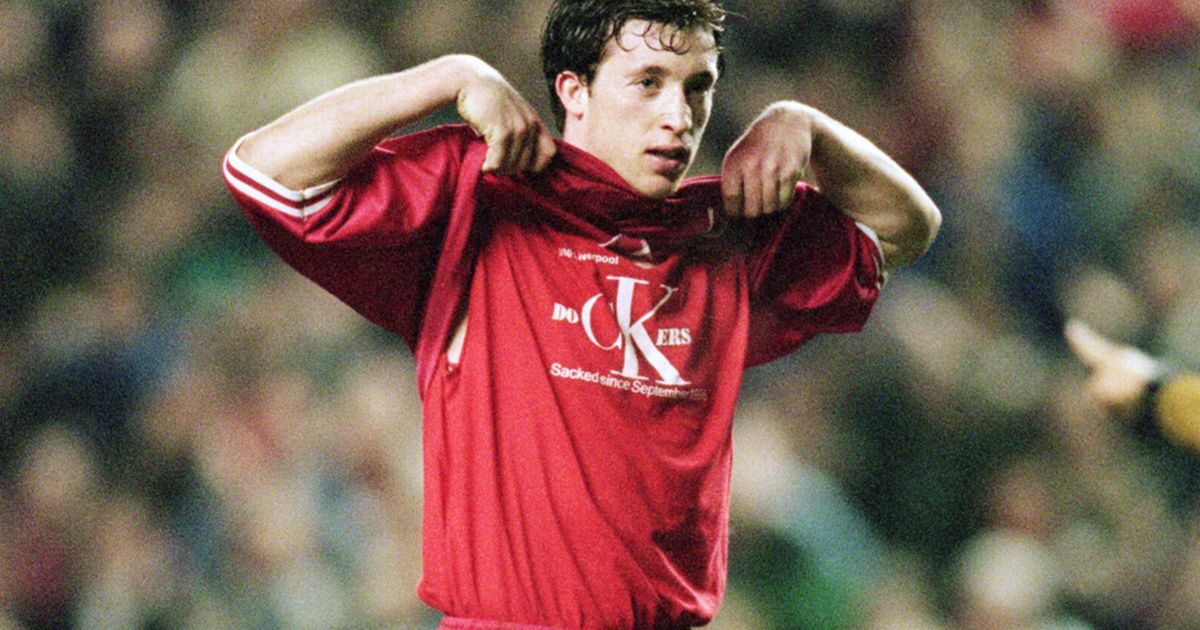
LFC hero Robbie Fowler showing solidarity with
the dockers' fight against cheap casual labour


Role of Socialists in the Sit-in 
Some of us who later founded the SSP played a major role in this historic event.

I first called to offer practical solidarity the morning after they started the occupation. We had been in the thick of building support for the 500 locked-out Liverpool dockers for the previous 15 months, and used our vast array of workplace contacts to arrange solidarity visits with Glacier workers all over Scotland – and parts of the UK, particularly those with big engineering industries.
This served several purposes, including financial survival for the workers’ families and a breach in the media shroud of silence.

On the issue of whether management could evict them, we explained the law, with the help of a couple of friendly lawyers, but emphasised that the ultimate means of defence of the sit-in from potential moves - involving police, or cowboy security firms - was to build mass support in the workplaces and surrounding community, creating a potential army of defence.

Solidarity Mass Pickets  
The employers hoped to isolate the sit-in with the help of media silence, aiming to starve the workers’ families into submission as Christmas loomed large. Workplace solidarity tours helped scupper that. It also countered the danger of boredom and demoralisation setting in amongst a workforce not previously known for involvement in the wider trade union movement.

When management told the arbitration service ACAS that they had no workforce, we smelt a rat, suspecting imminent eviction, and in discussions with the Occupation Committee suggested an early morning solidarity mass picket, built through a leaflet around workplaces and the mailing list of the Clydeside Dockers' Support Group (which I was the organiser of). That vastly boosted morale, became a weekly feature, and peaked at a turnout of 400.

Taking to the Streets 
We then suggested a pre-Xmas demo, which attracted well over 1,000 on Sunday 15 December. One report claimed 3,000.
The build-up was as important as this stirring event itself. The Occupation Committee had co-opted me as an adviser, and put me in charge of a small Demo Committee. We involved the absolute majority of the men, and a few of their partners, in street meetings, issuing hard-hitting leaflets that won support, by-passed the media blackout, and swamped workplaces and shopping centres across the west of Scotland.

An ACAS boss complained after a leaflet was left unwittingly on his windscreen, because it described Turner & Newall as ‘notorious merchants of death’, citing their appalling record on asbestosis. AEEU officials went ape-shit down the phone to the union convener, who firmly rejected their instructions and printed 29,000 of the ‘offending’ leaflet. This propaganda offensive helped bring T&N bosses to heel, as they already faced dire problems with £billions of outstanding asbestosis claims and feared their notoriety being broadcast.

Mass meeting of the locked-out Liverpool dockers


Supporting Locked-out Liverpool Dockers  
The workers were literally dancing with elation after the success of the demo. They then turned their attention to daily street collections in the run up to Xmas – for financial survival, but also to keep the campaign alive and in people’s minds.

The first big collection, on 18 December, raised £488… for the Liverpool dockers! The Occupation Committee rounded it up to £600, in an act of selfless solidarity born of their own experiences in battle. On Xmas Eve, a team hit Glasgow’s Argyle Street from 10am to 5pm and collected £2,800.

Negotiations began that day, involving both full-time union officials and the factory union convener and deputy convener. T&N’s Head of Employee Relations grizzled with rage that as they negotiated, Glacier workers were on the streets with megaphones and leaflets attacking T&N. That was precisely part of the point – to pile pressure on the company, and remind right-wing AEEU officials what was at stake.

A Christmas day breakfast was laid on in the occupied factory for families and supporters – another ingenious act of defiance and comradeship by people whose talents erupted in the heat of battle. 

Outright Victory! 
By Hogmanay, the 103 workers were celebrating a landmark victory. All were reinstated, with full union recognition, and very little conceded to the bosses on their conditions of work.
In a final fling at undermining union rights, the company tried to get a staggered return to work – which the AEEU full-time officials agreed to. The workers’ direct union representatives went ballistic, refused, said it was a ploy to potentially victimise leaders of the occupation, and won a proud, united return to work.

A multinational giant was brought to its knees by the tactics, skills, and impact on production by this factory occupation. Socialists played an important, constructive part, applying collective experience to living struggles, laying foundations for a united, working class socialist party - in the form of the SSP, established two years after the Polmadie 103's victory. 

Capitalists Complain! 
Such was the impact of this victorious struggle in the Southside of Glasgow, that a dissident voice in the hierarchy of Turner & Newall management reproduced the article I wrote on its tenth anniversary, with a covering note bemoaning their losses.

"Even if they worked only 5 days per week, at “£200,000-a-day” this 7-week strike cost them £7 million, plus legal and administrative costs of fighting the strike. And they lost not only the strike but their former stronger position against the union.
Here’s an exquisite example of why [former Glacier Metal Company CEO] Wilfred Brown’s ideas about Works Councils make management stronger, not weaker. Had Turner & Newall had the guts to restore this strong institution — instead of the cowardice of underhanded union-busting — they would have been in a stronger position overall in their discussion with the union."

Interestingly, he advocated a return to earlier methods of Works Councils - the much-vaunted concept of 'social partnership' - rather than full-frontal union-busting methods... to achieve precisely the same cost-cutting, profit-boosting attacks on workers' terms and conditions!

As workplace closures and massive redundancies erupt 20 years on, workers and their union leaderships should study, adapt and apply the lessons from this outstanding model of how to defy the dictatorship of capital.


Tuesday, 11 August 2015

KILL THE BILL: stop Tory wipe-out of workers' rights!

Even before the election of the Tories - by a mere 24% of registered UK voters - Britain boasted the reprehensible record of having some of the most repressive anti-worker, anti-union laws in the western world. Now David Cameron and his Business Secretary, Sajid Javid, have declared a war on workers' rights that exceeds even the worst assaults the hated Maggie Thatcher dared impose.

Their Trade Union Bill - and three accompanying so-called 'consultations' designed to add an additional dose of repression to existing laws without having to pass primary legislation - are potentially the biggest threat to rights at work in at least 50 years, and possibly since the infamous Taff Vale Act of 1901.


The latter came about in the wake of powerful collective action by railway workers, but was aimed at crushing the power of all unions to function, by making them liable for any loss of profits caused by a strike. It triggered a wave of strikes and the formation of what became the Labour Party, to give workers a political arm to fight with. Waves of united action won repeal of the Taff Vale Act in 1906.

THATCHER'S ACTS - KEPT BY LABOUR

Fast forward to the 1980s, where Thatcher's Tory regime imposed six major anti-union Acts. They were a coldly calculated reaction to the growth of workers' militancy in the 1970s and early 1980s, when millions took collective action to defend themselves and their communities from a concerted onslaught by successive governments seeking to restore the profit margins of the capitalist minority.

Thatcher's laws - which are intact to this day, left undisturbed by the 13 years of Labour in government - throw up multiple obstacles to the functioning of unions as a defense force for workers.


They insist on secret postal ballots (with full media interference on behalf of the employers) prior to any industrial action, rather than the fulsome debate of workers mass meetings and a vote on the spot. They incorporate the legal requirement to give employers at least 7 days notice of a ballot and another 7 days notice of any industrial action arising from a ballot.

They tightly restrict the definition of a trade dispute, banning 'secondary' solidarity strikes or any deemed 'political', such as against privatization.

They include multiple legal hurdles on the wording and conduct of industrial action ballots, which employers' lawyers have crawled all over for years, winning numerous injunctions in the Courts to outlaw democratically agreed strikes.

They make unions prey to seizure of their funds and assets, which has made many union leaders quivering wrecks in the face of demands by members to take action when it's the only means of self-defense.

UNION WEAKNESS INVITES TORY AGGRESSION

But now we witness the ultimate paradox; the terrible consequences for workers of the failure of the majority of union leaderships to resist and defy this legal straitjacket for decades. The subsequent weakening of the trade union movement means the state and employers feel far less need to accommodate the unions than if they'd put up a concerted fight. The TUC and individual unions' readiness to embrace 'social partnership' with the employers, instead of independently standing up for workers' rights and distinctive class interests, has reduced the employers' need for social partnership!


They instead feel confident in resorting to brutal, undisguised class warfare. Not because there's been a massive wave of strikes, as the Tories try to tell the more gullible population in their 'justifications' for their new Trade Union Bill; last year saw 788,000 days of strike action across the whole of the UK, which was a rise compared to recent years, but on a puny scale compared with the 11.9 million strike days in the 1980s.
No, this new onslaught is born of a recognition that the unions - with 6.5 million members in Britain, 630,000 in Scotland alone - still represents a powerful foe as the Tories plunge the knife into benefits, jobs, services and pay...provided union leaders stop pussy-footing around with empty rhetoric and apply themselves to a coordinated plan of action to halt austerity.

So the Tory Trade Union Bill is not the result of some public clamour for action against already-existing strikes and protests by organized workers, but rather a savage attempt to cut off that path to working class people who are increasingly furious at the poverty and inequality we face.

BALLOT RIGGING

The measures included in their Bill and accompanying 'consultations' are a full-frontal assault on the human and democratic rights of working class people, and indeed in breach of various European Court of Human Rights articles - which is a core reason the Tories aim to scrap the Human Rights Act of 1998, and seek to negotiate Britain's exclusion from many European legal directives.

In flagrant breach of ECHR rulings that "only the votes cast should count", the Tory Bill insists on a threshold of at least 50% of all who are eligible to vote in any union ballot for action. So those abstaining are counted as a vote against the action.

In a move that goes even further in its attacks on democracy than even those mentioned in the Tory manifesto or subsequent Queen's Speech, they insist on another hurdle of 40% of all those eligible having to vote for the action in the case of what is now dubbed "important public services". This adds to their original list of "essential public services", so it now includes workers in health, transport, education (of all those aged up to 17), fire services, border security and nuclear decommissioning and waste disposal. A pernicious added clause includes workers who are ancillary to such "important public services".

So for the millions thus affected, it's not enough to get a majority of the votes cast, but it must also be at least 40% of all the members eligible to vote, regardless of whether many of them abstained.

This ballot rigging is from a Business Secretary elected by only 38% of his local electorate; in a parliament with 331 MPs elected without a majority; by a Cabinet whose number would be cut by half, and the number of Tory MPs would drop by 270, if they'd had to win the 50% and 40% votes they now want to impose on workers and their unions.


The only other countries with similar outrageous barriers in ballots on the right to strike are Bulgaria and Romania - states not frequently quoted as a model for progress by the Tories!

LEGAL MINEFIELD & ARMY OF STRIKE-BREAKERS

But those outrageous 'high hurdles' are just the start of the effrontery to the free functioning of unions in the Bill.

Ballot forms will have to give "reasonably clear details of the matters in issue in the trade dispute" (so bosses' lawyers can challenge whether they are 'reasonably clear'); "the types of industrial action" when it's not a strike (again, a recipe for legal challenges compared with the current 'action short of strike action'); and "the period or periods within which action is expected to take place" (so employers can plan to undermine its effectiveness, and legally challenge it if dates change because the situation demands tactical changes - and in any case, how in hell are unions expected to know the exact dates of action well over a month beforehand?).
Instead of giving 7 days' notice to employers, 14 days' notice will now be required; again, neutering the impact by giving bosses ample time to plan counter-measures. And among the latter options will be the hiring of Agency workers to do strikers' jobs, as the Tories plan to scrap the ban on that which has been in place since 1973 - including right through Thatcher's years!

So they are arming employers with a legal minefield to stop action, and an army of vulnerable Agency workers issued the choice of 'scab or be sacked'.

ORWELLIAN POLICE REGIME

If, despite all this, a strike goes ahead, new laws on picketing aim to criminalize workers with the courage to fight back. The current Code of Conduct on picketing that limits it to six will become a law, so any more than that would be committing a criminal offense. So the more popular a strike, and the bigger the show of support on a picket line, the larger the number of workers to be branded criminals!
Unions are to be legally obliged to have a Picket Superviser, named to the police, with a badge or other ID, always either on or near the picket line, and in possession of a letter to produce to the police "or any other person who reasonably asks". An outrageous intrusion on the privacy and civil rights of union activists, and a trampling on the autonomy of unions.

Unions will have to inform the government of pickets and protests in advance, and "whether there will be loudspeakers, props, banners, etc"!

And contrary to the loaded language of the Tories' 'Consultation on Intimidation of Non-Striking Workers', these police-measures are not aimed at some rash of threats by pickets in the past. In fact, they set up the 2014 Carr Inquiry to try and find some evidence of this, to justify themselves, but none was found!

It's purely to intimidate workers into not exercising the right to withdraw their labour - a right that should be enshrined in any democracy's constitution. On top of that, they are 'consulting' on a new criminal offense of 'intimidation on picket lines'.

In a further Orwellian outrage, unions will have to give 14 days' notice of intent to use social media during industrial action, and "what blogs and websites will set out", or face fines.

Local authorities are expected to use Community Protection Notices against protesters - a measure aimed at successful pressure campaigns in support of workers in struggle.

INTERFERENCE IN UNION AFFAIRS

A whole raft of other measures likewise not only seek to effectively abolish the right to strike, but are a gross invasion of the internal democracy of unions, and of union reps ability to actually represent members at work.
Public sector employers will be forced to account in minute detail for every hour of union facility time granted to the elected union reps, every penny in wages paid to them, and the government will accrue the power to overrule agreements between such employers and unions, with the power to stop all facility time for union reps. And this will not only apply to shop stewards/reps, but also Learning Reps and Health & Safety reps.
The trade union Certification Officer is to be granted vast new powers to interfere in union affairs - even when not a single member has complained or demanded intervention. These include membership registers; union elections; ballots on mergers; political funds and rules; power to demand handover of union documents; and to question union staff and officers. All on pain of a £20,000 fine for failure to fully comply. All the entire policing exercise on behalf of the state is to be funded by a special levy on the unions!

CATACLYSMIC ATTACKS REQUIRE DEFIANT ACTION

This battery of new measures is a cataclysmic attack on the right to be in a union that is in any way effective as a collective defense of workers' rights and conditions; the right to strike; the right to free speech and freedom of association.

Those union and Labour leaders who spent two years telling workers to vote against Scottish independence and wait for 'justice with Labour' have a lot to answer for. But waiting for independence is not an option either, given the scale of wipeout of workers' rights we face here and now.

Urgent, immediate action in confrontation with the Tories, combined with a clear vision of an alternative future, is the order of the day.

The Tories' bogus 'consultation' ends in early September, followed by a second reading of the Trade Union Bill.

The TUC has promised a day of action when that debate in Westminster happens, and a demo at the Tory party conference on 4 October.

Each trade union, the STUC and TUC need to act with utmost urgency, calling meetings and forums of trade unionists to arm them with the facts, motivate them into taking action with a harsh warning of what is threatened.

They should call a genuine day of action as an opening salvo, with strikes and rallies in every region or city, appealing not only to those workers most immediately in the firing line - those in 'important public services' - but all trade union members, and indeed non-unionized workers, such as Agency staff, who face the horrendous choice of being ordered to cross picket lines to undermine fellow-workers' jobs and conditions, or lose their own job.

DEFY ANTI-UNION LAWS!

Such strikes would often be in defiance of existing anti-union laws, let alone the new additional repressive measures being grafted onto them; so be it! Unless union leaderships have the courage to take such action, the Tories will continue to feel emboldened into pursuing their dictatorial measures against workers. And unless such a lead is given, workers will lack belief in the ability of the movement to defy and defeat the Tories.
On the other hand, bold united action would win widespread support and involvement from working class people not yet even in a union. They need a vehicle to resist austerity.

SCRAP ALL THE REPRESSIVE LAWS

In fighting to kill off the Bill, the trade union movement and its allies need to make two other things crystal clear: a readiness to defy the Bill's measures even if the Tories ignore opposition and implement it; and a call not only to Kill the Bill, but also to repeal the entire package of already-existing anti-union laws that these new measures are being grafted onto.

It's widespread failure by most union leaders to defy the previous 30 years of anti-union laws that has emboldened Cameron et al. In contrast, those groups of workers who have defied these laws have always won huge concessions e.g. oil refinery construction workers.

DEVOLVE TO DISSOLVE!

The battle to confront and finish off the Bill should be combined with the demand for power over employment laws to be devolved to the Scottish parliament. That will unify workers who voted Yes and No in the Referendum. It points to an escape route from Tory Westminster dictatorship. And whilst the SNP leadership have never once publicly pledged to repeal the anti-union laws - the most vicious in the western world - the unions have the potential power to pound Holyrood into traveling that road, with the demand for a Charter of Workers' Rights to be ushered in as an example to the rest of the UK and beyond.

That's what the Scottish Socialist Party has consistently fought for. That's what the 630,000-strong trade union movement in Scotland needs to take decisive action in pursuit of.

Monday, 12 January 2015

TORY CLASS WAR ON WORKERS' RIGHTS


Anyone who doubts we are in the midst of a class war hasn't been awake recently!
The Tory party election manifesto for May's Westminster general election includes an open declaration of continued class war by the rich on the rest of us. That applies to most of their aims, but specifically new anti-trade union measures, a de facto ban on the right to strike for millions of workers, especially in the public sector.It comes as no surprise to trade unionists or socialists, but it highlights the need to struggle or face starvation.

The Tories want to legislate a 40 per cent threshold of all potential voters - NOT just those who ACTUALLY vote - in any union ballot for industrial action, before workers can take lawful action in self-defence from the government's escalating assault on their jobs, wages and conditions.


RIPPING UP OUR RIGHTS

The Tories have already ripped apart the few remaining rights we have at work.
Prior to the 2010 elections, the UK already boasted the most vicious, reactionary, anti-worker employment laws in the whole of Europe - after not just the 1980s Thatcher Dark Ages, but also the subsequent 13 years of Labour governments. Tony Blair shamelessly boasted of "the most restrictive employment laws in Europe", as his government unleashed a profit-crazed, totally deregulated banking and business regime on the population.

Then the present Westminster Coalition was foisted upon us in the rigged 2010 election outcome - rigged, because nobody was ever asked to vote for a Tory-LibDem coalition, and many were stupid enough to imagine voting LibDem was an anti-Tory vote!

Cameron and Clegg's Westminster boot-boys have trampled on the rights of workers in a systematic crusade to rob our wages, pensions, public services and jobs, so the rich can get obscenely richer.

PRICED OUT OF JUSTICE

Fees for taking cases of workplace mistreatment to Employment Tribunals have priced workers out of any pretense of justice. The Citizens Advice Bureaux report a fall in the number of new cases submitted since fees were introduced (in 2013) from an average 48,000 a quarter to 13,612 in the third quarter of 2014.
Cash is the chief barrier - and those workers not in a trade union are totally defenceless, as they'd have to fork out up to £1,200 just to get a Tribunal case heard.

In the CAB survey, 4 out of 10 workers with an issue they'd like taken to a Tribunal only had £46 a week left after paying their essential bills, meaning they'd have to save up for 6 months just to pay the fees for an Employment Tribunal - with no guarantee of success either, of course.

BLOCKING THE RIGHT TO STRIKE

Recently the Tories and LibDems introduced a rule that industrial action ballots require a turnout of over 50 per cent. That in the context of clamping down on the ability of unions to meet or function in workplaces. Most notoriously, the same government has abolished the facility for union membership fees to be collected from civil service workers' wages - in an attempt to smash the socialist-led PCS union - accompanied by removal of facilities for elected PCS reps to represent their members at work.

Now the Tories want to add the clause that unless over 40 per cent of all potential voters in such a ballot actually vote for it, any industrial action is illegal, and union funds could be seized.

They want this to apply to workers in the NHS, transport and fire services. Their excuse is that these services are 'essential' - something the same axe-wielding capitalist politicians deny in action as they slash jobs and public service provision in all these sectors.

LEGAL WEAPONS IN WAR ON WORKERS

Their aims are nakedly obvious. As the Tories gear up to force through the remaining £55billion in public sector cuts of the £90billion total that they've previously declared, they want to crush the resistance of workers in the frontline.

For instance, the Coalition has already shut down 39 fire stations since 2010, and shed 5,000 firefighters' jobs - so they want to neuter the ability of the Fire Brigades Union to fight back, as they are currently doing through strike action in several regions.

As they impose even more pay cuts on public sector workers who've had pay cuts for 6 or 7 years, the political arm of capitalism want to make collective action to win better pay legally impossible.

LEGALISED SCABBING

Alongside the 40 per cent threshold, the Tories plan to end the current restrictions on the use of agency workers as scabs during industrial action - so they can dragoon desperate people into undermining the conditions of fellow-workers, knowing full well that agency workers feel helpless and without rights in many cases.

And they want to 'review' minimum service levels during strikes, so as to prevent total shutdowns. Over the years I've often encountered situations in the likes of local government and the NHS where strikers' unions have had to agree levels of cover for emergencies during the strike that actually meant MORE staff on duty than on the average day before the strike, such are the appalling levels of under-staffing! Now the Tories want to turn the screw even tighter, as part of a package to effectively outlaw the right to strike for millions of workers.

MPs AND MORALITY!

The MPs who want to further shackle workers have absolutely no moral basis for their 50 per cent and 40 per cent thresholds on union votes. These chancers enjoy full rights and resources to put their case in the media and at meetings in a fashion workers' union representatives can't even dream of being allowed to do in their workplaces.

They spend £millions on election propaganda - on top of their free access to compliant, sycophantic media, owned by the same billionaires who use the mainstream media to smear and demonise trade unionists.

NO GOVERNMENT GOT 40%

But despite all these advantages, those MPs who have hamstrung workers' unions with their anti-union laws can't even get the kind of share of the vote they want to impose on the unions.

Since 1945, not a single one of the successive Westminster governments got over 50 per cent of the votes cast, let alone a majority of the entire electorate.

In fact, not one UK government since 1945 has gained the votes of over 40 per cent of the electorate - the threshold the Tories plan to impose on union ballots.

In the 2010 Westminster general election, 433 out of 650 MPs gained their bloated salaries despite getting less than 50 per cent of the votes cast.

Cameron's Tories only gained 36 per cent of the votes cast in 2010, in a 65 per cent turnout of voters - meaning these capitalist dictators only got 23.5 per cent of the electorate to vote for them! And that's across the UK, not Scotland, where they were overwhelmingly rejected.

Even if you distort reality by adding on the LibDems' share (a distortion, because not a single MP was elected as a Tory-LibDem candidate), the Coalition still only managed 38 per cent of the electorate.

SCOTLAND 1979

The 40 per cent con-trick is especially bitter-tasting in Scotland. In 1979, a clear majority of voters favoured a Scottish parliament, but were denied their wishes by the '40 per cent of the electorate' threshold that had been imposed on that year's referendum. Scots were denied a parliament for another 20 years.

NO TRUST IN LABOUR

Trade unionists and socialists must resist these escalated attacks on workplace rights by every available means. But relying on a Labour government is not one of those means.

It was Labour in government from 1997 to 2010 which retained Thatcher's brutal package of anti-union laws. It is today's Labour party that refuses to pledge repeal of these laws.

It is today's Labour party that pledges to cut public spending every single year they are in office until they have cleared the public deficit - making workers and communities pay for the debts created by Labour's £1.3trillion bailout of the bankers that the same Labour government had given free rein to 'get rich quick'.
In fighting these draconian additions to the worst anti-union laws in Europe, trade union leaders should give workers some confidence by declaring that where the issues demand it, the unions will simply defy the anti-union laws and take decisive action to defend workers. These are laws imposed by governments elected by minorities, ruling in the class interests of the 1% who own the bulk of the wealth created by the working class in the first place.

WORKERS' RIGHTS AND SOCIALISM

Working class people need to shape their own future, demanding full democratic rights at work, through their trade unions, community organisations, and by building a mass socialist party.

The SSP has consistently fought for workplace democracy, including the rights of free trade unions to function, and the right to take action by a majority vote after full debate.

As long as we are dominated by an economic system that seeks maximum profit for the few, workers will face attempts to castrate their unions and ban their rights to resistance. We need to combine the struggle for workplace rights with the broader battle for democratic ownership and control of the economy - for socialism.