Showing posts with label factory occupations. Show all posts

Tuesday, 17 August 2021

UCS: STILL AN INSPIRATION, 50 YEARS ON

UCS WORK-IN BANNER 

On a hot 30 July 1971, the shop stewards in Clydebank’s John Brown shipyard took control of the yard gates as the historic UCS work-in began. 

Jimmy Reid declared to the mass meeting inside: “There will be no hooliganism, there will be no vandalism, there will be no bevvying, because the world is watching us.”

Thus began one of the most momentous showdowns by working people since the 1926 general strike.

UCS had been formed in 1968, comprising the yards in Govan, Linthouse, Scotstoun and Clydebank. The naked greed of shipbuilding dynasties had meant a refusal to invest and modernise, causing Britain's world share of shipbuilding to plummet from 80% during WWI to 5% in 1970. Mergers and mass redundancies in the 1960s ran alongside increased productivity by the workers. The 1964-70 Labour government refused to nationalise the industry, instead merging the UCS yards, with a 17% government share. 

In 1969, the notorious Tory, Nicholas Ridley, held a one-hour meeting on the Clyde with his pal Sir Eric Yarrow, owner of Yarrow’s shipyard and Scottish Tory Party treasurer. ‘Old Nick’ subsequently drafted his Ridley Memo: “We could appoint a government butcher to cut up UCS, hive off Yarrow’s and sell (cheaply) the remainder of UCS to private industry.” (December 1969)


Jimmy Reid addressing mass meeting 


Tory Spirit of Butchery 

Ted Heath’s 1970-74 Tory government proceeded in this spirit of butchery, consciously confronting workers and their rights, deliberately decimating industry and speeding up monopoly ownership of what remained. Tory Minister of Trade and Industry, John Davies, spelt it out with his infamous ‘lame ducks’ speech, declaring an end to state subsidies to industries in crisis, especially targeting Rolls Royce and UCS. 

In June 1971 the Tory government triggered the liquidation of UCS by refusing management’s modest demand for £6million to sustain it. They instead conceded £3million to keep UCS afloat until August, whilst conducting a bogus review by ‘The Four Wise Men’, comprising mostly merchant bankers. Their subsequent Report smeared shipyard workers and recommended the slaughter of 6,500 of the 8,500 jobs, with closure of Clydebank and Scotstoun, only keeping Govan and Linthouse on the basis of decimated conditions and halving of the workforce. 

The baying mob of Tory MPs who cheered these announcements badly underestimated the response of the UCS workers and hundreds of thousands who came to their side in a 14-month battle that engulfed society in Scotland and beyond. 


50,000 march in Glasgow on 23 June 1971 


Work-In, not Walk-Out 

In June 1971, the Union shop stewards from the four yards decided that instead of walking out to the Labour Exchanges (JobCentres) or being declared redundant they would occupy the yards and continue production of ships; a work-in. Their opening demands were “Not a man down the road - the right to work - not a yard will close.”

They sent delegations to the government, only to be ‘slung a deafie’. The fight was on. They called a West of Scotland conference of shop stewards, 800 strong, which announced a general strike and demonstration on 23 June. About 150,000 took solidarity strike action and 50,000 marched through Glasgow. Placards carried slogans like ‘Launch UCS - Sink Heath’ and ‘Nationalise not Paralyse - we shall not be moved’. The STUC at first called for nationalisation of the yards. 

When on 29 July the government tried to ride this storm and announced 6,500 job losses - with at least another 15-30,000 associated jobs to go - the working class of Scotland and beyond were inspired by the act of mass, militant defiance by the UCS workers. 

A conference of 1,200 shop stewards from Scotland and the North of England agreed financial support to sustain the work-in, and called a mass half-day strike and demo on 18 August. About 200,000 workers marched out of Scottish workplaces and joined the demo of 80-100,000 in George Square, the biggest since at least the days of Red Clydeside; some reckoned the largest since the Chartist movement of the 1840s. The themes of the right to work and the power of the working class in solidarity were combined with calls to kick out the Tory government. Industrial and political demands fused. 


John Lennon and Yoko Ono gave donation and solidarity

One of many Support Concerts 


Unprecedented Solidarity 

The UCS workers’ courageous defiance evoked unprecedented solidarity. Workplace collections and weekly levies came from across Scotland, Britain and as far afield as New Zealand. Combined with the 50p a week levy on the UCS workers themselves, this financial solidarity sustained the wages of the work-in and the campaigning costs. School students held jumble sales. Pensioners donated. A cleaner in Yorkshire sent a week's wages every month. 

Workers’ heads were raised because a group of trade unionists defied every law, every conservative norm, and waged the battle for the right to work from the stronghold of staying inside their own workplace. The occupied yards were their fortresses, with buses between the yards for mass meetings; a Coordinating Committee and several sub-committees, including ones for finance and publicity, and speaking tours of workplaces that trained hordes of orators. 

Even the middle layers of society were drawn to this mass workers’ movement, with virtually every local shopkeeper publicising the UCS struggle, and donations famously from John Lennon and Yoko Ono. 

Such was the ferment that Sir David MacNee, Glasgow's chief constable, phoned a Cabinet meeting to warn the government that the police couldn’t guarantee order in the city if the yards were closed. The government postponed the closure announcement by two weeks to allow them to bring troops back from Northern Ireland! 


General strikes developed against 1970s anti-union laws


Monumental Government U-turn

In the subsequent months the government tried manoeuvres to divide and conquer, especially by declaring a new Govan Shipbuilding Ltd, initially only embracing Govan and Linthouse. 

Eventually, by February 1972, they were forced into a monumental retreat. In contrast to their refusal to cough up £6million the previous June, the same John Davies told the House of Commons on 28 February 1972 that the Tory government would hand over £30million to Govan Shipbuilders Ltd, which would now also include the Scotstoun yard, and look favourably on subsidies to the impending buyer of Clydebank - the USA oil-rig giant, Marathon Manufacturing.

Months of negotiations did involve very substantial concessions by the unions, with loss of jobs and severe sacrifices of conditions, but the four yards remained and about 6,500 of the 8,500 jobs were saved. This was a massive victory compared to the wholesale butchery that any meek-and-mild response from their unions would have guaranteed. 

Perhaps the biggest significance of the UCS work-in was on the wider working class and political developments. It was part of a rising tide of industrial action engulfing the Heath government, but added impetus and confidence to it. A major factor in the February 1972 government U-turn on UCS was their bloody-nosed defeat just days prior by the miners, in their first national strike since 1926, which included the NUM's mass picket attracting 15,000 workers, which shut down the Saltley coke depot, near Birmingham. 


One of UCS worker Bobby Starrett's cartoons, a vital part of the publicity  


Wave of Workplace Occupations 

The UCS work-in inspired a wave of workplace occupations; one every fortnight at its peak! 

Many won unconditional victories, and mostly involved the even more radical tactic of sit-in strikes, rather than the continued production of the UCS work-in tactic. At Plessey’s in the Vale of Leven, the victorious sit-in included workers’ barricades!

The issue of a general strike was never far below the surface, particularly in the first half of 1972. This period included the government’s panic-stricken release of five jailed dockers' leaders from London's Pentonville prison - in the face of general strike action, organised from below despite the hesitancy of national union leaderships and the TUC. 

Young people were touched by the daring militancy of UCS, with school students staging strikes and demonstrations in the summer of 1972, over school conditions and job prospects.  

Ultimately, in a further showdown with the miners and an emboldened working class, Heath’s government was booted out in February 1974, and the incoming Labour government was obliged to nationalise at least most of the shipyards.  


Marching for the right to work 


Tony Benn amongst the marchers - driven to the left by UCS 


Mass Defiance Can Win 

The limitations of a work-in with continued production of ships – as compared with an occupation and strike - could be the subject of a whole separate article. This issue came to a head in January 1972, when the UCS Coordinating Committee reversed their earlier stance and agreed to launch one of the newly built ships (at the Govan yard) as ‘an act of good faith’, rather than a full-blown showdown with the government which had been their policy up until then. How many more jobs could have been saved and conditions protected if they had stuck to their original policy, combined with the battle for nationalisation of the yards, will never be known for certain. 

What was known at the time - by tens of thousands of working people - is that the mass defiance of occupying the yards built unprecedented workers’ unity and solidarity and forced a humiliating U-turn on a Tory government just as vicious in its desire to butcher jobs and conditions as the current Boris Johnson cabal. 

Over and beyond that, UCS demonstrated workers’ control in practice, and the managerial skills of working-class people - a glimpse of a socialist future where capitalist owners and their enforcers, in the form of senior management, would be redundant. 


Mass meeting in the occupied yards 


Lessons 50 Years On 

50 years on, as we exit the period of COVID-19 lockdowns, workers are confronted by closures, mass redundancies and systematic attacks on workplace rights, including the new capitalist pandemic of Fire and Rehire. Amongst the many lessons from UCS that need to be applied is that pleading with the bosses and their governments guarantees defeat for workers and their communities, whereas methods of mass collective struggle that brush aside the whole machinery of anti-trade union legislation can win victories. 

The brutal determination by Pladis multinational to close the McVitie's factory is a classic current example of where the methods of the UCS workforce would be required to reverse the butchery of jobs and livelihoods. 

As part of the crazed drive for short-term profiteering - through the conscious destruction of industry and the financialization of the economy - in the decades since UCS, the shipyards on the Clyde are barely a shadow of their former selves, and heavily dependent on production orders for war, rather than socially useful production. 


Socialism or Barbarism - a real and harsh choice today 


Socialism or Barbarism 

50 years on, the climate catastrophe and the capitalist economic crisis highlighted and exacerbated by COVID-19, both scream out for a green re-industrialisation of Scotland; a Socialist Green Recovery plan, embracing the skills and equipment of what remains of the shipyards. For example, to build the desperately needed fleet of ferries, and marine engineering equipment for the production of clean, green, affordable energy.

Everyone talks these days about ‘recovery’. But perhaps the most central recovery required is the working-class solidarity and fighting spirit epitomised by the UCS workers and their hundreds of thousands of allies 50 years ago. Without such a revival of collective action by organised workers and the solidarity which that would undoubtedly evoke, the capitalists and their hired governments will continue to wreak havoc and destruction on jobs, living standards, democratic rights and the very planet we live on. 

Socialism or barbarism is not empty rhetoric, but indeed the stark choice we face. And the lessons of UCS need to be studied and absorbed to help re-arm new generations of fighters, to make socialism the chosen future. 


Saturday, 31 December 2016

FACTORY SIT-IN VICTORY: when Glacier Metal workers beat multi-national


Twenty years ago today, on Hogmanay 1996, the Glasgow Glacier Metal engineering workers were ringing the bells in elation at their victory, whilst Glacier bosses were wringing their hands in despair.

The ‘Polmadie 103’ had scored a landmark victory for class struggle trade unionism, defeating the factory’s multinational owners, Turner & Newall, after a seven week factory sit-in.

It was the first workplace occupation in ten years, and was provoked by dictatorial bosses trying to impose a 15-point change of contract, which aimed to double company profits; cut wages by £123 a week; and slash sick pay, the canteen subsidy and other benefits won over 25 years by these members of the AEEU, now part of UNITE the union.

The boss’s method of imposing this was designed to undermine the union. He picked on the youngest tradesman in the workforce, and ordered him to risk health and safety by doing two jobs at once. The lad went to his union stewards, who had prepared for this confrontation and - advising the entire workforce to ‘down tools’- went upstairs to negotiate.

As they waited outside his office, the manager sneaked down to the factory floor to declare: “Gentlemen, you are all sacked!" 
Four of those sacked were on holiday, while another was convalescing after operations for brain tumours. 

Advantages of Factory Occupation  
Critically, instead of walking out the door on strike - which years before had landed them in a prolonged lockout - the workers stayed in the factory, declaring themselves available for work.

This totally wrong-footed management, and gave the highly-skilled workers several strategic advantages.
They seized control of a factory with £1million-worth of undelivered precision engineering products, paralysing £200,000-a-day production and thereby putting pressure on the owners from customer companies. I'll never forget the irate phone call to the factory during the sit-in, when a company boss bellowed: "What's going on with my orders? I've got a f***ing nuclear power station to run!"

They psychologically brought the battle into the bosses’ domain, preventing them bussing in scabs past legally-hamstrung pickets with police assistance, as Timex had done in Dundee 1993.
And above all, they were fighting for their jobs, justice and full trade union rights inside a well-heated factory, with snow-storms outside, making it one huge campaigning nerve centre.

Building Workers' Solidarity  
If the factory occupation had remained a ‘folded arms’ affair, waiting for concessions from the employers, it would have collapsed, or at best allowed some dirty deal to be hatched above their heads between the management and top AEEU officials, who had secret contact with the company as early as five days into the occupation.
But this inspiring workers’ struggle was a model of strategy and tactics. Firm discipline was established by the union stewards and Occupation Committee, with a booze ban and daily mass meetings. Meals were cooked and the factory kept clean.

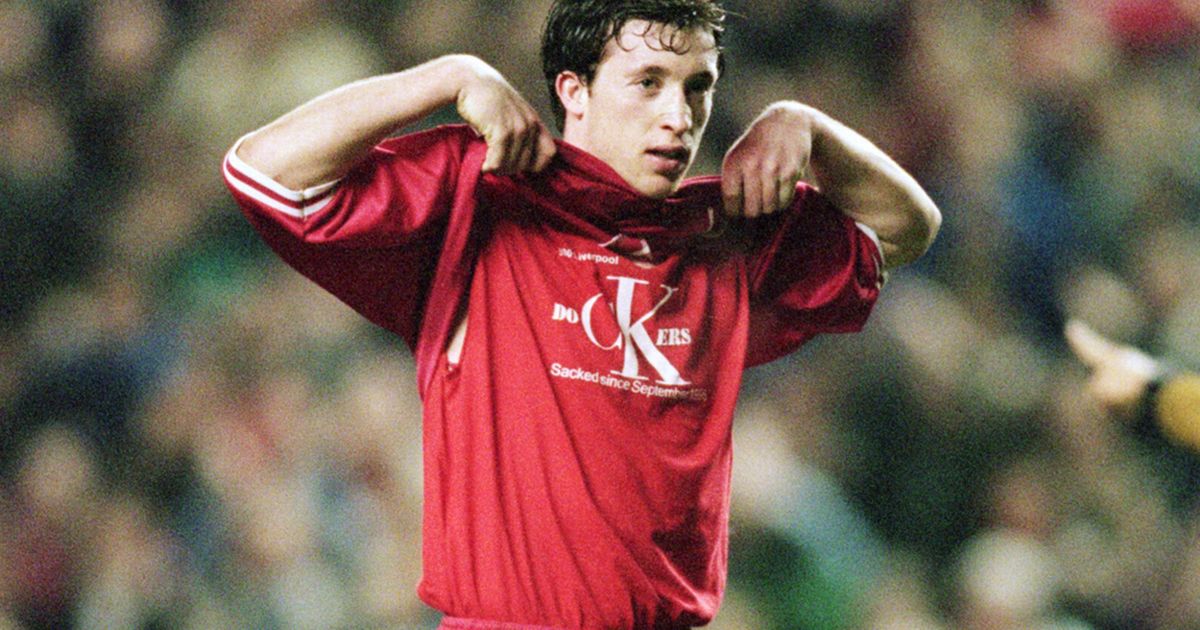
LFC hero Robbie Fowler showing solidarity with
the dockers' fight against cheap casual labour


Role of Socialists in the Sit-in 
Some of us who later founded the SSP played a major role in this historic event.

I first called to offer practical solidarity the morning after they started the occupation. We had been in the thick of building support for the 500 locked-out Liverpool dockers for the previous 15 months, and used our vast array of workplace contacts to arrange solidarity visits with Glacier workers all over Scotland – and parts of the UK, particularly those with big engineering industries.
This served several purposes, including financial survival for the workers’ families and a breach in the media shroud of silence.

On the issue of whether management could evict them, we explained the law, with the help of a couple of friendly lawyers, but emphasised that the ultimate means of defence of the sit-in from potential moves - involving police, or cowboy security firms - was to build mass support in the workplaces and surrounding community, creating a potential army of defence.

Solidarity Mass Pickets  
The employers hoped to isolate the sit-in with the help of media silence, aiming to starve the workers’ families into submission as Christmas loomed large. Workplace solidarity tours helped scupper that. It also countered the danger of boredom and demoralisation setting in amongst a workforce not previously known for involvement in the wider trade union movement.

When management told the arbitration service ACAS that they had no workforce, we smelt a rat, suspecting imminent eviction, and in discussions with the Occupation Committee suggested an early morning solidarity mass picket, built through a leaflet around workplaces and the mailing list of the Clydeside Dockers' Support Group (which I was the organiser of). That vastly boosted morale, became a weekly feature, and peaked at a turnout of 400.

Taking to the Streets 
We then suggested a pre-Xmas demo, which attracted well over 1,000 on Sunday 15 December. One report claimed 3,000.
The build-up was as important as this stirring event itself. The Occupation Committee had co-opted me as an adviser, and put me in charge of a small Demo Committee. We involved the absolute majority of the men, and a few of their partners, in street meetings, issuing hard-hitting leaflets that won support, by-passed the media blackout, and swamped workplaces and shopping centres across the west of Scotland.

An ACAS boss complained after a leaflet was left unwittingly on his windscreen, because it described Turner & Newall as ‘notorious merchants of death’, citing their appalling record on asbestosis. AEEU officials went ape-shit down the phone to the union convener, who firmly rejected their instructions and printed 29,000 of the ‘offending’ leaflet. This propaganda offensive helped bring T&N bosses to heel, as they already faced dire problems with £billions of outstanding asbestosis claims and feared their notoriety being broadcast.

Mass meeting of the locked-out Liverpool dockers


Supporting Locked-out Liverpool Dockers  
The workers were literally dancing with elation after the success of the demo. They then turned their attention to daily street collections in the run up to Xmas – for financial survival, but also to keep the campaign alive and in people’s minds.

The first big collection, on 18 December, raised £488… for the Liverpool dockers! The Occupation Committee rounded it up to £600, in an act of selfless solidarity born of their own experiences in battle. On Xmas Eve, a team hit Glasgow’s Argyle Street from 10am to 5pm and collected £2,800.

Negotiations began that day, involving both full-time union officials and the factory union convener and deputy convener. T&N’s Head of Employee Relations grizzled with rage that as they negotiated, Glacier workers were on the streets with megaphones and leaflets attacking T&N. That was precisely part of the point – to pile pressure on the company, and remind right-wing AEEU officials what was at stake.

A Christmas day breakfast was laid on in the occupied factory for families and supporters – another ingenious act of defiance and comradeship by people whose talents erupted in the heat of battle. 

Outright Victory! 
By Hogmanay, the 103 workers were celebrating a landmark victory. All were reinstated, with full union recognition, and very little conceded to the bosses on their conditions of work.
In a final fling at undermining union rights, the company tried to get a staggered return to work – which the AEEU full-time officials agreed to. The workers’ direct union representatives went ballistic, refused, said it was a ploy to potentially victimise leaders of the occupation, and won a proud, united return to work.

A multinational giant was brought to its knees by the tactics, skills, and impact on production by this factory occupation. Socialists played an important, constructive part, applying collective experience to living struggles, laying foundations for a united, working class socialist party - in the form of the SSP, established two years after the Polmadie 103's victory. 

Capitalists Complain! 
Such was the impact of this victorious struggle in the Southside of Glasgow, that a dissident voice in the hierarchy of Turner & Newall management reproduced the article I wrote on its tenth anniversary, with a covering note bemoaning their losses.

"Even if they worked only 5 days per week, at “£200,000-a-day” this 7-week strike cost them £7 million, plus legal and administrative costs of fighting the strike. And they lost not only the strike but their former stronger position against the union.
Here’s an exquisite example of why [former Glacier Metal Company CEO] Wilfred Brown’s ideas about Works Councils make management stronger, not weaker. Had Turner & Newall had the guts to restore this strong institution — instead of the cowardice of underhanded union-busting — they would have been in a stronger position overall in their discussion with the union."

Interestingly, he advocated a return to earlier methods of Works Councils - the much-vaunted concept of 'social partnership' - rather than full-frontal union-busting methods... to achieve precisely the same cost-cutting, profit-boosting attacks on workers' terms and conditions!

As workplace closures and massive redundancies erupt 20 years on, workers and their union leaderships should study, adapt and apply the lessons from this outstanding model of how to defy the dictatorship of capital.


Saturday, 2 January 2016

RECOLLECTIONS OF GLACIER METAL FACTORY SIT-IN VICTORY


On Hogmanay 1996, the Glasgow Glacier Metal engineering workers were ringing the bells in elation at their victory, whilst Glacier bosses were wringing their hands in despair.
The ‘Polmadie 103’ had scored a landmark victory for class struggle trade unionism, defeating the factory’s multinational owners, Turner & Newall, after a seven week factory sit-in. 
It was the first workplace occupation in ten years, and was provoked by dictatorial bosses trying to impose a 15-point change of contract, which aimed to double company profits, cut wages by £123 a week and slash sick pay, the canteen subsidy and other benefits won over 25 years by these members of the AEEU, now part of UNITE the union.

The boss’s method of imposing this was designed to undermine the union. He picked on the youngest tradesman in the workforce, and ordered him to risk health and safety by doing two jobs at once. The lad went to his union stewards, who had prepared for this confrontation and, advising the entire workforce to ‘down tools’, went upstairs to negotiate.

As they waited outside his office, the manager sneaked down to the factory floor to declare: “Gentlemen, you are all sacked!" Four of those sacked were on holiday, while another was convalescing after operations for brain 

Advantages of Factory Occupation  
Critically, instead of walking out the door on strike, which years before had landed them in a prolonged lockout, the workers stayed in the factory, declaring themselves available for work.

This totally wrong-footed management, and gave the highly-skilled workers several strategic advantages. They seized control of a factory with £1million worth of undelivered precision engineering products, paralysing £200,000-a-day production and thereby putting pressure on the owners from customer companies. I'll never forget the irate phone call to the factory during the sit-in, when a company boss bellowed: "What's going on with my orders? I've got a f***ing nuclear power station to run!"
They psychologically brought the battle into the bosses’ domain, preventing them bussing in scabs past legally-hamstrung pickets with police assistance, as Timex had done in Dundee 1993. And above all, they were fighting for their jobs, justice and full trade union rights inside a well-heated factory, with snow-storms outside, making it one huge campaigning nerve centre.

Building Workers' Solidarity  
If the factory occupation had remained a ‘folded arms’ affair, waiting for concessions from the employers, it would have collapsed, or at best allowed some dirty deal to be hatched above their heads between the management and top AEEU officials, who had secret contact with the company as early as five days into the occupation. But this inspiring workers’ struggle was a model of strategy and tactics. Firm discipline was established by the union stewards and Occupation Committee, with a booze ban and daily mass meetings. Meals were cooked and the factory kept clean.

Role of Socialists in the Sit-in 
Some of us who later founded the SSP played a major role in this historic event.

I first called to offer practical solidarity the morning after they started the occupation. We had been in the thick of building support for the 500 locked-out Liverpool dockers for the previous 15 months, and used our vast array of workplace contacts to arrange solidarity visits with Glacier workers all over Scotland – and parts of the UK, particularly those with big engineering industries. This served several purposes, including financial survival for the workers’ families and a breach in the media vow of silence.

On the issue of whether management could evict them, we explained the law, with the help of a couple of friendly lawyers, but emphasised that the ultimate means of defence of the sit-in from potential moves - involving police, or cowboy security firms - was to build mass support in the workplaces and surrounding community, creating a potential army of defence.

Solidarity Mass Pickets  
The employers hoped to isolate the sit-in with the help of media silence, aiming to starve the workers’ families into submission as Christmas loomed large. Workplace solidarity tours helped scupper that. It also countered the danger of boredom and demoralisation setting in amongst a workforce not previously known for involvement in the wider movement. 
When management told the arbitration service ACAS that they had no workforce, we smelt a rat, suspecting imminent eviction, and in discussions with the Occupation Committee suggested an early morning solidarity mass picket, built through a leaflet around workplaces and the mailing list of the Clydeside Dockers' Support Group (which I was the organiser of). That vastly boosted morale, became a weekly feature, and peaked at a turnout of 400.

Taking to the Streets 
We then suggested a pre-Xmas demo, which attracted well over 1,000 on Sunday 15 December. One report claimed 3,000. The build-up was as important as this stirring event itself. The Occupation Committee had coopted me as an adviser, and put me in charge of a small Demo Committee. We involved the absolute majority of the men, and a few of their partners, in street meetings, issuing hard-hitting leaflets that won support, by-passed the media blackout, and swamped workplaces and shopping centres across the west of Scotland.

An ACAS boss complained after a leaflet was left unwittingly on his windscreen, because it described Turner & Newall as ‘notorious merchants of death’, citing their appalling record on asbestosis. AEEU officials went ape-shit down the phone to the union convener, who firmly rejected their instructions and printed 29,000 of the ‘offending’ leaflet. This propaganda offensive helped bring T&N bosses to heel, as they already faced dire problems with £billions of outstanding asbestosis claims and feared their notoriety being broadcast.

Supporting Locked-out Liverpool Dockers  
The workers were literally dancing with elation after the success of the demo. They then turned their attention to daily street collections in the run up to Xmas – for financial survival, but also to keep the campaign alive and in people’s minds.

The first big collection, on 18 December, raised £488 … for the Liverpool dockers. The Occupation Committee rounded it up to £600, in an act of selfless solidarity born of their own experiences in battle. On Xmas Eve, a team hit Glasgow’s Argyle Street from 10am to 5pm and collected £2,800.

Negotiations began that day, involving both full-time union officials and the factory union convener and deputy convener. T&N’s head of Employee Relations grizzled that as they negotiated, Glacier workers were on the streets with megaphones and leaflets attacking T&N. That was part of the point – to pile pressure on the company and remind right-wing AEEU officials what was at stake.

An Xmas day breakfast was laid on in the occupied factory for families and supporters – another ingenious act of defiance and comradeship by people whose talents erupted in the heat of battle. 

Outright Victory! 
By Hogmanay, the 103 workers were celebrating a landmark victory. All were reinstated, with full union recognition, and very little conceded to the bosses on their conditions of work. In a final fling at undermining union rights, the company tried to get a staggered return to work – which the AEEU full-time officials agreed to. The workers’ direct union representatives went ballistic, refused, said it was a ploy to potentially victimise leaders of the occupation, and won a proud, united return to work.

A multinational giant was brought to its knees by the tactics, skills, and impact on production by this factory occupation. Socialists played an important, constructive part, applying collective experience to living struggles, laying foundations for a united, working class socialist party - in the form of the SSP, established two years after the Polmadie 103's victory. 

Capitalists Complain! 
Such was the impact of this victorious struggle in the southside of Glasgow, that a dissident voice in the hierarchy of Turner & Newall management reproduced the article I wrote on its tenth anniversary, with a covering note bemoaning their losses.

"Even if they worked only 5 days per week, at “£200,000-a-day” this 7-week strike cost them £7 million, plus legal and administrative costs of fighting the strike. And they lost not only the strike but their former stronger position against the union.
Here’s an exquisite example of why [former Glacier Metal Company CEO] Wilfred Brown’s ideas about Works Councils make management stronger, not weaker. Had Turner & Newall had the guts to restore this strong institution — instead of the cowardice of underhanded union-busting — they would have been in a stronger position overall in their discussion with the union."

Interestingly, he advocated a return to earlier methods of Works Councils - the much-vaunted concept of 'social partnership' - rather than full-frontal union-busting methods... to achieve precisely the same cost-cutting, profit-boosting attacks on workers' terms and conditions!

As workplace closures and massive redundancies erupt 20 years on, workers and their union leaderships should study, adapt and apply the lessons from this outstanding model of how to defy the dictatorship of capital.