Showing posts with label Theresa May. Show all posts

Tuesday, 18 December 2018

TORIES ADMIT GUILT - BUT CONTINUE INSECURE WORK CRIMES


When is a radical new package of workers’ rights nothing of the kind? When it’s announced by a besieged Tory government, increasingly bombarded by public anger at the horrendous insecurity of jobs and workplace rights in Britain.

Theresa May is today trumpeting a package of measures that her spin doctors describe as “the most radical upgrade of rights at work in a generation”. Let’s look behind the manufactured headlines.

They plan legislation that insists employers issue a “statement of rights” from the first day of a worker’s employment – including what paid leave they are entitled to for illness, maternity and paternity.

Anything that improves transparency in worker’s rights is welcome. But this is a planet apart from what many have fought for: the demand of full employment rights from day one in a job, as opposed to having to wait full two years before having legal rights on things like unfair dismissal – the same Tory government doubled the qualifying period.

The Tories promise to “close a loophole that allows agency workers to be paid less than permanent staff.” A welcome small step, if it refers to hourly rates of pay, but it still does nothing to combat the short-term, crushingly insecure nature of agency work.

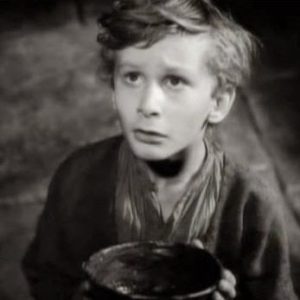
Oliver Twist, Tory-style


The new legislation will give workers “the right to request more predicable hours”.

To ‘request’!? This pre-Christmas promise is about as useful as Charles Dickens’ starving child, Oliver Twist, having the right to utter “Please, Sir, I want more”, only to be walloped over the head with the gruel-serving ladle by his over-fed master!

Already, workers have ‘the right to request’ changes in their working shift patterns – but employers have the right to reject that request, and habitually do so, using the catch-all ‘business needs’ excuse.

Crimes Admitted – Without Solutions


This new legislation is an implicit admission that workers’ lives are wracked by the rampant insecurity caused by zero hours contracts, short hours contracts, agency work and the gig economy. But it falls far short of actually tackling these issues.

For instance, the Tories have reiterated the viewpoint of former Tony Blair aide, Matthew Taylor – whose Review on modern working practices they commissioned – that an outright ban on zero hours contracts “would negatively impact more people than it helped.”

This is all part of their deliberate and malicious conflation and confusion of two entirely different things; flexibility and insecurity.

Workers need flexibility, on the likes of starting and finishing times, to cope with the increasingly complex demands of family life, or juggling a job with a college course, for instance. But that’s not provided by the insecure, low-paid jobs that are increasingly the only employment on offer – part-time, short-term, agency, zero hours or short hours contracts.

Ban Zero Hours Contracts


Deliveroo delivery workers at a solidarity protest. [Photo: Craig Maclean]
Zero hours contracts give all the flexibility to the employers, who have workers at their beck and call, sending them home “unwanted” and unpaid on a regular basis, and denying workers shifts for weeks as a punishment if they have the audacity to turn down one shift. And all the insecurity of income, working patterns, denial of access to credit and mortgages, etc, is the lot of workers on this modern epitome of casual labour.

As a major recent survey of 10,500 retail workers by my own union, Usdaw, confirmed, this insecurity of income and lifestyle is the root cause of a galloping epidemic of mental ill health.

Real Protection – With Real Flexibility


Instead of token gestures about “the right to request more predictable hours” we need real, radical legislation to guarantee every worker the right to a minimum working week of 16 hours, if they want it, as pioneered by my own party, the SSP, and now my own union, Usdaw – and as agreed unanimously as policy at the recent TUC congress.


That would mean outright abolition of zero hours contracts. It would help eradicate the criminal situation where a full one million workers are only in part-time jobs because they can’t get the full-time job they actually want. It would erase the startling fact that – by the Tory government’s own admission – 400,000 workers regularly work 6 hours a week or less. And it would confront the atrocity that sums up the modern curse of underemployment, governments can boast of record levels of employment: but the Office of National Statistics counts anyone working a minimum of one hour a week as being employed!

Unionise and Organise for Guaranteed 16-hour Minimum Week


And legislation guaranteeing a minimum week of 16 hours to all workers who want it would also offer genuine flexibility; as the policy Motion I put forward at the 2018 Usdaw national conference put it, the 16-hour minimum would apply “except where a worker, accompanied by their union representative, requests less hours”. That’s also the wording of the Motion we successfully submitted from Usdaw at the British TUC.

Workers in the burgeoning sector of insecure work, in its various forms, would be wise not to rely on the Tories’ false claims of providing protection. Instead, they need the collective protection of being in a union, and in turn the unions need to get stuck into fighting for implementation of the policies adopted at union and TUC conferences.

This latest Tory announcement amounts to an admission of guilt, but without any real plans to end their crimes against workers.

As ‘the Good Book’ might put it, the sinner hath sinned, but repenteth not!

Wednesday, 21 June 2017

DUP: WHO THEY ARE AND HOW TO FIGHT THEM


Far from being strong and stable, as the robotic Theresa May repeated ad nauseum during the general election, the new Westminster government is a toxic Tory coalition of chaos.
May's reliance on the misnamed Democratic Unionist Party (DUP) in her desperate bid to cling onto power - and prevent a left-leaning minority Corbyn government - has built explosive instability into the very foundations of her regime. 

But who are the DUP? What are their roots? How did they manage to become the biggest party in Northern Ireland? And how can socialists and trade unionists dislodge this reactionary Tory party from its dominant position?

The DUP's particularly reactionary brand of conservatism has smacked those previously unaware of their politics like a stinking wet fish in the face. 
This is the party that blocked equal marriage by wielding their power of veto in the Northern Ireland Assembly, after a majority had voted in favour of bringing the North into line with every other part of the UK. The DUP regard LGBT people as "an abomination", with one of their MPs declaring they could only be "saved by the power of prayer". In fact, in 1977 they launched and were at the heart of the charmingly named campaign, Save Ulster From Sodomy. 
They are creationists, denying science. Climate change deniers - although as we will mention later, ruthless, corrupt opportunists when they can make a fast buck out of allegedly 'green' environmental measures, as implemented by their power-sharing government with Sinn Fein!

Old Testament DUP 
Their attitude to women is equally prehistoric. They deny women the right to control over their own bodies through the right to abortion - even in cases of rape. 
As Theresa May discovered after declaring her intention of negotiating a 'confidence and supply' deal with "our friends in the DUP" - a loose version of coalition government - the DUP are strict Sabbatarians. They refused to negotiate on a Sunday, and kept the hapless May waiting until the Monday. 
It's hardly surprising that comedian Frankie Boyle described them as "the political wing of the Old Testament", or that another wag dubbed the DUP "the Old Testament with fortnightly bin collections."

Pork Barrel Politics
But when Scottish Tory leader Ruth Davidson rushed to the nearest TV cameras to declare she had been on the phone to Theresa May asking for reassurances that a deal with the DUP would not mean a reversal of legislation on LGBT rights here, she was guilty of one of three things. Profound ignorance of the politics and roots of the DUP; cynical opportunism to win kudos amongst voters for her 'oh-so-liberal' social policies; or a bit of both. 

The DUP are backward-looking reactionaries, but they are also masters at duping their own electorate by having other policies attuned to win votes from mostly working-class Protestants. In fact, surveys have shown that 73% of DUP voters favour advances on abortion rights, and a majority favour equal marriage. So pushing their bigotry on these social issues doesn't win them a majority amongst Protestants at the ballot box, and won't be their preoccupation in carving out power and influence for themselves at Westminster.

Instability 
Rather than push their reactionary social policy agenda, the DUP are far more interested in exploiting their unexpected power as kingmakers to wring funds out of May for some vote-catching projects, or as the BBC N Ireland correspondent rightly put it, "to have slightly less severe austerity than they'd otherwise impose, for they certainly won't get enough funds to avoid austerity measures altogether". 

As opportunist vote-hunters with an ear for working class concerns, the DUP are opposed to Tory plans on pension cuts, and call for UK-wide abolition of the bedroom tax.
And whatever concessions this pork barrel politics forces on May, it will add to the severity of cuts for working class people elsewhere in the UK; another strand of government instability. 

Brexit Chaos 
One of the DUP's other policy planks could spell disaster for their Tory friends: they are pro-Brexit, but oppose a 'hard border' between the North and South of Ireland. Some close observers believe they preached the virtues of a Leave vote in the EU Referendum in order to curry favour with voters concerned to hold onto their British identity, in the belief that a majority in the UK would reject their advice and vote to Remain - thereby handing the DUP a win-win situation. 
Their voters in the working class and rural poor would be potentially crucified by the impact of border tariffs and trade barriers, so the DUP try to square the circle, advocating an open border between the EU member state in the South and the Brexit North - but try to avoid arguing for special status for Northern Ireland within a Brexit deal, in case that encourages the SNP in their pursuit of the same for Scotland, thereby undermining the cohesion of the 'United' Kingdom. 
At the very least, their presence in the Westminster government weakens the full-blown, Little Englander 'hard Brexit' advocated by the Blue Brexiteers of the Tory right, now advocated by May. Even on that one issue, a 'coalition of chaos'. 

Sectarian History 
Those who rightly condemn the DUP for their mind-blowing reactionary social policies - but leave it at that - are in serious danger of implying all Protestants who made them the dominant Unionist party in several recent elections are a homogenous block of Bible-thumping, anti-women, homophobic, anti-Catholic bigots. 
Not so! Many of the DUP's party activists undoubtedly fit that description, but their broad base have voted the way they did for entirely different and varied reasons, rooted in the history of Ireland, the consciously divisive role of the British landowning and capitalist class in Ireland historically, and indeed the role of other political forces in Ireland to this very day. 

Looking at the growth of the DUP - from a fledgling party launched in 1971 by Ian Paisley, to the winners of 36% of all votes cast in N Ireland recently - actually only serves to emphasise their anti-working class role, as perpetrators of division within working class communities. 
In turn, it shows that socialists and trade unionists in Scotland who wish to help break the grisly embrace of the DUP over many working class Protestants need to assist those brave forces fighting for working class unity, equal rights and socialism in Ireland - not reinforce the sectarian divisions by being cheerleaders for the nationalist Sinn Fein. 

Divide-and-Rule 
Ireland was conquered as Britain's first colony. The methods used included bloody military conquest, land robbery, mass death through entirely avoidable famines, and a long history of 'divide-and-rule' tactics, pitting Catholic and Protestant peasants and workers against each other. 
But throughout the centuries, waves of united struggles confronted the same ruling classes of Britain, with peasants and - in the 20th century - workers periodically overcoming the sectarian divisions injected into them by the landlords, capitalists and military chiefs, who sought to exploit them. 
The pinnacle of division was reached after the 1920s Partition of Ireland - and the religious and class-based discrimination that particularly hammered the Catholic minority in the North, but also working class Protestants. For instance, businesses had up to 30 votes in council elections - the bodies allocating jobs and housing - but poor Catholics and Protestants without property (tenants) had no vote at all, right up to the late 1960s!


Workers' Unity
In the 1960s, the trend was towards integration of working class communities, through mixed housing estates, radical struggles and united strikes by workers, and then the mass upsurge for Civil Rights in 1968, involving masses of young Catholics, but also big sections of Protestant youth and trade unionists. 
The entirely justified demand for an end to discrimation against Catholics on jobs, housing allocation - and even voting rights - initially won widespread support across both communities. 
But the leaders of both the Civil Rights and trade union movements failed to clearly link the demand for civil rights with a struggle for well-paid jobs and decent housing for all. 

This opened the door to reactionary bigots like founder of the Christian fundamentalist Free Presbyterian Church, Rev. Ian Paisley, to whip up support for his anti-Catholic vitriol amongst the most reactionary minority of rural, middle class and despairing sections of Protestants. 
He was able to whip up the justified fears of many that in a society of mass unemployment, low wages and appalling housing conditions (amongst the worst in Europe at the time), more opportunities for Catholics meant fewer for Protestants. 


Paisleyite Thuggery 
Paisley wasn't averse to mobilizing thugs with guns and truncheons to attack Civil Rights marchers - or two years later to arson-attack Catholics in their homes, leading to the biggest population displacement since the Second World War. 

By the 1960s the British ruling class had no interest in holding onto Northern Ireland. British monopoly firms by then were making twice as much profit from investments in the South as in the North. 
For them, some arrangement of a unified capitalist Ireland, willing to provide copious profits for British and multinational companies, was far preferable to subsidizing an unstable statelet they'd created half a century earlier. But they'd created the monster of sectarianism, which wouldn't lie down and accept the plans of the modern British capitalist class and their governments. 

Failed Opportunities
History is made by the struggle between living forces. The 1960s in Ireland - in the context of world-wide movements against inequality, capitalism and wars - was a golden opportunity for the organised trade unions and labour movement to advance working class unity and struggle towards a socialist Ireland. 
Instead, the leadership of that movement failed to advocate and lead such a unifying struggle, and the forces of Paisleyism went from a tiny but violent fringe - held in contempt by most Protestant workers - to a much bigger, and brutally divisive force.

The failures of the same labour movement leadership to resist state repression - after the Paisleyite pogroms against Catholics, and the introduction of British troops in August 1969 - led to the emergence of the Provisional IRA. Regardless of the intentions of the young volunteers, the methods of the Provos deeply alienated Protestants, driving them further into the arms of the likes of Paisley - their own worst enemies. 

DUP Launch
Paisley and his cohort launched the DUP in that context, in 1971, appealing to the fears of many Protestants that the upper-class Unionist Party leadership - landowners and factory owners, dubbed by many 'the fur coat brigade' - were selling them out. 
The Unionist Party tried belatedly to arrange power-sharing with middle-class nationalist politicians, hoping to stabilize Ireland for better profit margins for the rich. 
At first only a minority - mostly in rural villages and small towns - responded to the DUP's sectarian rants. But over the years they made inroads, based on growing suspicions towards the 'fur coat' Unionist politicians; fear of being driven into an unattractive united Ireland by the armed struggle and sometimes nakedly sectarian actions of the IRA; and the (false) impression that the demagogic Ian Paisley was standing up for 'the Protestant people'. 


Ulster Resistance: DUP paramilitary wing
The fortunes of Paisley and the DUP were boosted by the 1985 Anglo-Irish Agreement, arranged over the heads of the population by the governments of London, Dublin and the Ulster Unionists in Belfast. This earlier variant of a power-sharing agreement met a torrent of vitriol from Paisley at a series of mass 'Ulster Says No' rallies, which whipped up the fear of rule by Dublin amongst sections of increasingly beleaguered Protestants. 

But when the Tories tried to block Jeremy Corbyn's advance amongst the working class and youth in the recent General Election by dredging up his links with Sinn Fein and the IRA in the days of the Troubles, they display their customary, rank hypocrisy by now holding hands with the DUP. 
That's the party whose founders and past leaders - including Ian Paisley, Peter Robinson and Ivan Foster - all attended the secretive, invitation-only rally in Belfast in November 1986, to launch the paramilitary Ulster Resistance. Paisley was secretly filmed donning the red beret of this militaristic outfit, then saluting its assembled 'soldiers'. 

From the Bullet to the Ballot Box
Ulster Resistance collaborated with the murderous loyalist paramilitaries of the UVF, Red Hand Commandos and UDA to smuggle guns, rocket launchers and copious caches of ammunition from the likes of Lebanon and South Africa.
One of those arrested for these gun-running operations - more than once - was Noel Little, whose daughter Emma Little Pengelly has just been elected as DUP MP for South Belfast. 
So Ulster Resistance was effectively the paramilitary wing of the DUP in the few years of its active existence, at the height of Paisleyite mobilizations against the power-sharing 1985 Anglo-Irish Agreement. 

But in a parallel evolution to that of Sinn Fein/IRA, the very same DUP luminaries turned towards the ballot box rather than the bullet in subsequent years, grabbing power (and privileged incomes!) for themselves - through the new version of power-sharing... with the politicians they'd for years denounced as the Devil incarnate, mobilizing and misleading hundreds of thousands through a sectarian quagmire for their own ends. 

Demand for Peace 
After 30 years of 'the Troubles', with over 3,600 dead and countless maimed and scarred for life, working class communities were war-weary, sick of the killings, and made their desire for an end to the bitter conflict known to the loyalist killing gangs and IRA, through a series of vast demonstrations, peace rallies and united workers' strikes against killings and death threats. 
Those movements of trade unionists, and women in the communities - combined with the growing exhaustion of the paramilitaries, as they came to recognize the failures of their armed methods, and felt increasingly isolated from the mood of 'their own' communities - led to the peace talks, and the ceasefires of 1998. 

Paisley - who for decades had demagogically denounced any suggestion of 'power-sharing' as a concession to 'Popery' - was instrumental in establishing the power-sharing government, becoming First Minister, with his Deputy in the person of ex-IRA leader Martin McGuinness. The two became popularly known as 'The Chuckle Brothers', such was their level of friendly collaboration... including in horrendous austerity cuts, privatisation, welfare benefit attacks, and a drive to reduce Corporation Tax! 


Power-sharing Agreement - for the Political Elite  
The Peace Process, through both the 1998 Belfast Agreement and the 2006 St Andrew's Agreement, established a system of power-sharing that is purely between a political elite; it certainly doesn't open the door to working class people of either or both communities sharing power. 
It's a system with a history in other nations (such as Lebanon) also bedeviled by communal conflicts; divisions implanted by imperialist powers in the first place. 
It's an institutionalized arrangement between parties rooted in segregated communities.
Whilst the accompanying ceasefires were and are welcome - and the overwhelming majority of both Catholic and Protestant people are totally and utterly opposed to going back to the bleak, bloody days of the Troubles - the power-sharing agreement tends to reinforce the sectarian segregation between communities. 

Institutionalised Sectarianism 
In the Northern Ireland Assembly, every elected MLA has to be designated as either a Unionist, Nationalist, or Other. Additionally, what's called the Petition of Concern gives a full-blown veto to any 30 MLAs - either Unionist or Nationalist - against anything the Assembly majority might vote for. In that built-in mechanism, the duly elected MLAs who refuse to define themselves as either Unionist or Nationalist, but are classified as Others, literally disappear from the voting process. So much for democracy! 

A recent case, before last Christmas, illustrates this monstrously sectarian set-up. A majority of Assembly members voted for a motion demanding the resignation of Arlene Foster over her handling of Cash for Ash, which 30 Unionist MLAs vetoed, turning the Assembly majority into its opposite. 
The same device was used by the DUP to block lifting the ban on same sex marriage. 

DUP/Sinn Fein Austerity 
Theresa May is being propped up in office courtesy this voting system in Northern Ireland, which institutionalizes and reinforces a sectarian headcount, as was the case to an unprecedented degree in the June general election.
For a decade, the DUP and Sinn Fein caught up with and then eclipsed their more 'moderate' rivals in the respective communities: the Ulster Unionist Party and SDLP. 

For a decade the DUP and Sinn Fein were content to collaborate in savage cuts; privatisation of services either through the Assembly or councils they controlled; a shared ambition to reduce the public sector; reduction of corporation tax; and benefit cuts averaging £2,000 to over 100,000 people. 

The DUP is reactionary to the core on women's issues; Martin McGuinness and Gerry Adams have both described Sinn Fein as 'an anti-abortion party'. In the South's parliament, the Dail, Sinn Fein TDs abstained in a vote on a Bill calling for the right to abortion in cases of fatal foetal abnormalities in 2013, only adopting that one narrow concession to abortion rights at their subsequent party conference. 


Cash for Ash Scandal 
Before his death, McGuinness toppled the DUP/Sinn Fein government led by Arlene Foster in January 2017, by resigning as Deputy First Minister. The issue was the Cash for Ash scandal. 
This was a scheme introduced in Britain, then adopted by Foster when she was Enterprise Minister in 2012 - with one critical alteration that opened the door to outrageous corruption. 
The cap on state subsidies for use of allegedly environmentally friendly biomass wooden pellets was scrapped, so that for every £1 spent by businesses, big farmers and individuals burning this fuel, they were awarded £1.60 from the public purse. 
When her advisers alerted Foster of the dangers of abuse, back in 2013, she dismissed them, and several of the DUP hierarchy, advisers and friends accelerated their investments in the scheme. 
Empty factories and farm outhouses literally burnt these pellets endlessly. They burnt taxpayers' money, to the extent an estimated £490million overspend in subsidies mounted up, with warnings from the Audit Commission that the eventual handout to these corrupt chancers will reach £1billion. 

Turning a Blind Eye to Corruption 
These corrupt practices were known to all the major politicians since at least early 2016, but not one of the parties - including Sinn Fein - lifted a finger to expose or end it. 
As recently as December 2016, Sinn Fein abstained on a vote in the Assembly demanding Arlene Foster's resignation as First Minister pending a public inquiry. They only brought the issue to a head, through Martin McGuinness triggering the March 2017 Assembly elections, after public protests erupted, with Sinn Fein at risk of losing their popular base for turning a blind eye to their DUP partners' corruption. 

Sectarian Headcount 
In the March Assembly elections and subsequent June 2017 general election, Sinn Fein whipped up righteous anger at the DUP's methods. In the words of their recently elected Fermanagh MP, Michelle Gildernew, they called on Catholic voters "to put manners on them".   
They conducted a belligerent campaign to make Sinn Fein the biggest party in the North, which wiped out all remaining SDLP MPs, but also played right into the hands of the DUP. 
The DUP focused on dire warnings to the Protestants that SF, Gerry Adams and 'the IRA' would become the biggest party unless they all voted DUP. 

In the most blatant sectarian headcount since the height of the Troubles in 1970, with appeals to "keep out the other side", the DUP rose to 36% of all votes cast by both communities, and Sinn Fein to 29%. 
The inbuilt sectarian division that the power-sharing system assumes allowed both major parties to escape scrutiny on their appalling track record on austerity; on social, economic, class questions that impact on the lives and livelihoods of working class people, regardless of what religious tag is attached to them; which side of the 'peace lines' they live on. 


United Working Class 
The DUP are blatant reactionaries, who only get away with their anti-working class agenda by whipping up the fears of working class Protestants of losing their identity and rights by being coerced into a capitalist united Ireland. 
Sinn Fein is nothing like a socialist party - even though many who vote for them are - and are incapable of appealing to Protestant workers - in part because of their historic links with the IRA's campaign of individual terrorism. 

In the recent elections, they've turned up the volume on their calls for a border poll - referenda North and South on reunification of Ireland, as permitted under the Good Friday Agreement - something now also echoed by the Green Tory Fianna Fáil party in the South. 
Sinn Fein have become increasingly triumphalist and belligerent on this demand, with references to demographic changes possibly making the Catholics a majority in the North a few years ahead. The sum total impact of that approach was to dragoon even more Protestants into voting DUP, whose vote rose nearly 10%, out of fear and uncertainty. Further sectarian polarization on the electoral front. 

There is a growing, desperate need for a working class socialist party that actively reaches across the community divide, uniting workers on class issues, but also guaranteeing the democratic rights of all communities in a socialist Ireland. 

A Socialist Ireland 
The vision of a socialist Ireland - a world apart from the type of societies that currently exist, North and South - is what's required to unite working class people, by convincing  them not only of the social and economic advantages, but that guarantees for all minorities would be embedded in such a socialist democracy. 
Consent, through patient explanation - and above all years of united struggle by working class people on common, class questions - is the route to a socialist Ireland, not ultimatums or coercion in any form.




Monday, 20 March 2017

WIN INDEPENDENCE FOR WORKERS' RIGHTS: don't rely on EU bosses bearing gifts!


The SNP government's declaration of a second Referendum, including its timing - and the brutal, dictatorial response of unelected Tory Prime Minister, Theresa May - has framed the whole debate about independence around EU membership and Brexit. 

As the Scottish Greens, rightly, help the SNP vote for Indy Ref2 in the Scottish parliament, they both - wrongly - make Brexit and membership of the EU and its Single Market the centrepiece of the case for Scottish independence.

Socialists unequivocally support Scottish independence - but not as a means of making life more comfortable, more obscenely profitable for the capitalist elite, whether home-grown or multinational.
We want to win independence as a means to end Tory dictatorship from Westminster, on behalf of the bankers and billionaires, wielding the butchers' knife to public services, pay, job security, rights at work, and our civil rights. 

The SSP's call for an independent socialist Scotland is an inspiring goal that would transform the lives of the working class majority of the population, from the cradle to the grave. Independence would empower a Scottish government – provided it was a government with the principles, policies and political will to confront the capitalist powers at home and abroad – to redistribute wealth and power from top to bottom.

That also makes the case for a socialist Scotland an indispensable weapon of persuasion in the battle for self-rule. Without that message being heard loud and clear, working class people won't be inspired to vote for change, and could be thereby imprisoned in at least another decade of Tory savagery, especially given the enfeebled, war-torn state of Labour. 


Separate Fight for Indy from the EU 

Socialists and trade unionists need to wrestle the case for independence away from being about membership of capitalist Brexit Britain or the capitalist EU. 

It's true enough indeed that the 62% Remain vote in Scotland being ignored by the Blue Brexiteers adds to the case for the Scottish people being empowered to make their own decisions, through independence. But that alone will never win independence; for starters, calling on the 400,000 pro-Indy voters who chose Leave to now vote for independence so Scotland can Remain in the EU is utterly divisive and counterproductive.

I strongly believe we need to demand two key things alongside describing the transformational vision of what could be achieved in an independent socialist Scotland, to decouple the case for Indy from the divisive, confusing issue of the EU. 

Firstly, call for a separate decision on an independent Scotland's relationship to the EU to be fully debated in democratic forums AFTER winning independence, including a post-independence Referendum on the options then available. 

And secondly, here and now broadcast that we want an independent socialist Scotland to help forge cooperation between equals, on the basis of an alliance of socialist democracies across Europe - instead of either the Blue Brexiteers' capitalist, isolationist hell-house, or the EU of brutal big business interests. 


Tell the Truth - about Brexit

In fighting to convince a majority of working class people to vote Yes, we need to tell the truth - including on what needs to be done to defend and vastly enhance workers' rights, at work and in their communities. 

Those who imagined a Brexit vote would turbocharge a wave of united workers' struggle against the Tories and capitalist bosses are indulging in a dystopian version of La La Land. Whilst for many the Leave vote was a raging against years of neglect by the capitalist machine, the Brexit outcome has sown even more confusion and division, including the scapegoating of migrant workers, and handed the Tories an unexpected golden opportunity to bludgeon to death the flimsy rights workers cling onto. If we let them away with it!


Tell the Truth - about the EU 

But when the SNP and Scottish Greens advocate the gushing glories of Scotland keeping its place in the EU, they are at bottom advocating a continuation of the capitalist Age of Austerity, and the interlinked attacks on workers' rights. 

Whilst most ordinary people who voted to Remain in the EU did so for honourable, internationalist ideals – and in rejection of the axe-wielding, service-slashing, pay-cutting Tories, plus the ugly racism of Farage, Boris Johnston and their Leave leadership - many also shared the SSP's view that it was the lesser of two evil choices in the binary EU Referendum. 

One of the key tasks of socialists, including in our workplaces and unions, is to unmask the debilitating, demobilizing nonsense peddled not only by the SNP and Greens, but especially (and more importantly) by most trade union leaders, that membership of the EU is the road to salvation for workers' rights. 

Struggle is the only Guarantee 

Our fundamental message needs to be that united, collective struggles by workers is what's won the all-too-limited rights we have; not some benign handouts from the EU and its ruling, unelected executive, the European Commission (the selected heads of 28 Member states). 

And whether in or out of the EU, it will require massive resistance and action by workers and their organizations to halt and reverse the tide of assaults on our rights and conditions. Just as we need to hoist high the case for a Scotland run by its working class majority, a socialist Scottish republic, so too we need to enhance people's understanding that class-based struggle is the only guarantee of decent wages, workplace conditions, equality, humane public services, environmental protection...

Evolution of the capitalist EU 

Like any institution, the EU has changed over time, reflecting wider trends throughout the capitalist societies it was founded to uphold and develop in the first place. And those changes are reflected in the EU Directives, Regulations and policies - issued by the European Commission, or sometimes ruled on by the EU's Court of Justice (ECJ). Some have been helpful to those struggling for better rights andconditions for working class people in the various member states; others have been downright dangerous, obstructive and regressive. 

Space prevents a full description, but suffice to say in an earlier period of the EU, particularly from the late-1980s - some progressive regulations were issued, encapsulated in the term 'Social Chapter'. But the EU never pretended to be a socialist institution; it preferred the term 'Social Market' - the model of post-War Germany, with some limited state regulations over the excesses of the capitalist market.


Social Chapter - a Passing Phase

Compared to the red-in-tooth-and-claw savagery of Maggie Thatcher’s monetarists of the 1980s, EU President of the time, Jacques Delors, won rapturous applause at the 1988 TUC conference, for his promises of what became the Social Chapter at the following year’s Strasbourg Summit. What Delors carefully concealed, of course, to the assembled TUC delegates, was his role – as its Finance Minister - in helping the ‘Socialist’ Mitterand government of France abandon all the promised reforms that had enthused millions in the previous elections.

In the face of subsequent defeats at the hands of Thatcher’s civil war against workers’ rights and livelihoods, culminating in the defeat of the 1984/5 miners’ strike, a big majority of union leaders sheltered behind the mildly progressive rules and Directives issuing from the EU Commission in that period. It was a substitute for giving leadership in struggle. It ran in tandem with their constant refrain during the 13 wasted years of Tory rule: “Wait for a Labour government”. It was one feature of the defeatist, class-collaborationist philosophy of far too many union leaders at the time – which aided and abetted the biggest wealth transfusion to the rich from the rest of us over 30 years of them discouraging a more combative course by workers.


As the crisis of capitalism intensified, the EU’s phase described as the Social Chapter died; morphed from being a sweetener to bitter pills, to being the poison of austerity and deregulation of the market itself; from being a partial shield from Thatcherism in Britain to being a vehicle for the spread of ‘Thatcherism’ across the EU.

The EU's lifelong adherence to the interests of monopoly capitalism has increasingly meant the Commission, European Central Bank, and European Court Justice have helped national governments enforce vicious austerity, particularly since the 2008 bankers' crisis. 


European Decency Threshold Downgraded 

A few examples illustrate the general trends, and the central lesson that we need to rely on working class struggle, not the EU, to resist the savagery of the capitalist class and their pliant politicians. 

In the past, the European Decency Threshold, which called for the national minimum wage in each EU country to match 68% of the national average wage, was a very useful weapon in the hands of those of us fighting against the growing theft of wages for profit. But it was only ever an aspiration, not legally enforceable on each state's government. And as social democratic parties and governments converged with the traditional conservatives in unabashed defence of capitalism - as in New Labour - the EU reflected this and drastically downgraded the Decency Threshold, rendering it almost useless in the fight for a decent living wage here or abroad.


Workers Won Reforms, not EU bosses 

Many of the positive rights attributed to the EU by its zealous advocates are either the product of class struggles by workers in one or more EU state, or actually have nothing whatsoever to do with the EU! 

When the TUC General Secretary, Frances O'Grady, last year wrote that "It's the EU that guarantees workers paid holidays, parental leave and equal treatment of part timers" - a claim repeated almost verbatim by Jeremy Corbyn, who added "equal pay" to the list - they were at best misleading workers.
Dangerously misleading, in a fashion almost designed to make workers rely on the benign EU Commissioners rather than defend our rights and conditions through the organised trade unions and their allies. 

Nothing to do with the EU!


Entitlements to paid holidays vastly predate the very existence of the EU, or even its EEC predecessor. French workers won guaranteed annual paid leave of 12 days back in 1936, when they forced the elected Left Front government to take action by occupying the factories and striking! 

Trade union struggles in the UK won the Holidays Pay Act in 1938. 

And even today, organised union pressure has meant UK workers are guaranteed 5.6 weeks paid holidays, well better than the 4 weeks the EU demands.


Equal Pay 

Equal pay - still disgracefully denied to millions of women in practice - was legislated for in the UK in 1970, well before Britain even joined the Common Market/EEC, in 1973. And the Equal Pay Act was forced upon the British government by the ground-breaking strike action of women workers in Fords Dagenham plant in 1968. Furthermore, the same women had to launch a more prolonged strike years after the Act was passed, to actually get the equal pay it promised! 

So whilst anti-discrimination Directives from the EU are welcome, they merely reaffirmed what was won on the picket lines and workers' demonstrations. 

The EU Directives guarantee 14 weeks paid maternity leave; decades of campaigning has won the concession of 37 weeks here. 

Health and Safety laws in Scotland are based on the 1974 Act that was conceded on the wave of industrial struggles that overthrew Ted Heath's Tory government in February 1974; it was not a generous handout from either British capitalists nor their EU co-thinkers. 

Some EU Regulations, like the Working Time Directives, acted as a dented, limited shield in the face of savage attacks by Thatcher's, and subsequently Blair's governments. In terms of capping compulsory hours of work at 48 and insisting on guaranteed minimum break times during and between shifts, they are welcome reforms. 

But all along the British government insisted on opt-out clauses, and can do so entirely legally, within the framework of EU regulations and rulings. For instance, the Tories' railroading laws to remove doctors and nurses from the 48-hour limit underlay the Junior Doctors' strike last year. And all workers in Scotland can 'choose' - often under 'subtle' duress from employers - to waive that right anyway, fuelling the life-threatening long hours culture we are cursed by.


Capitalists Pick and Choose 

The positive EU measures are often ferociously resisted and bypassed by the Westminster club of capitalist politicians, but the equally numerous anti-working class EU Directives and regulations are eagerly seized upon to back up their drive to privatize, slash public expenditure and make workers pay for a capitalist crisis caused by bankers and the profit system. 

And in the case of Scotland, these EU Directives have been frequently used as an excuse for inaction, or regressive measures, by the SNP government. We shouldn't forget that as an added reason to decouple the case for Scottish independence from the SNP's advocacy of the EU as a land of milk and honey.


Strangling Public Spending 

For decades, and increasingly in recent years, the EU has framed laws to aid the privateers and the help enforce the capitalists' chosen path of austerity. 

The EU Stability and Growth Pact prohibits government budget deficits above 3% of GDP, thereby banning state expenditure to provide jobs, houses and services, reinforcing the downward spiral of cuts. 

A 2008 Directive called for postal services to be "fully open to competition by December 2012", adding to the Tory (and Labour) armoury in shedding the 400-year-old, public sector Royal Mail. 

From the EU's First Rail Directive in 1991, to its more recent Fourth, the EU Commissioners seek to break up and privatize the entire rail networks of all EU states. 

Successive British Tory and Labour governments needed no encouragement from the EU to privatise all and sundry, or apply a scorched earth policy to public services. But they certainly got encouragement, as increasingly anti-working class governments in the member states huddled together in the one and only EU institution with the powers to initiate rules and Directives - the unelected European Commission.  


SNP Hide Behind EU Directives 

That's an example of where the SNP government chooses to comply rather than defy all that's reactionary and regressive about the EU. 

On both the issues of railway renationalisation and Scotland's ferries, they chose to obey the laws of the capitalist market, including its EU bureaucracy, and hide behind them instead of proceeding to implement the oft-expressed wishes of the overwhelming majority of Scottish people by taking the entire transport system into public, democratic ownership. 

It was only after strike action and legal challenges by the RMT union that the SNP government conceded on keeping some of the ferries in the public sector, and retreated on implementing their contract clause for ScotRail that insists on driver only trains - in itself the product of their refusal to nationalise the railways, regardless of EU rules.


Undermining Wages 

Another major weapon used by employers and national governments in their war on wages is the EU Posted Workers Directive (PWD). This, and associated ECJ rulings, allows profiteers to set up shop abroad, or post workers from one EU country to another branch of their operations, to undermine wage rates. 

In its actual wording, the EU PWD states: "Member states shall guarantee workers posted to their territory the terms and conditions of employment...which in the member state where the work is carried out...are laid down by law, regulation or administrative provision." 

On the surface, harmless sounding? On the contrary, it means bosses paying only the national minimum wage to migrant workers, not the rate for the job negotiated and fought for through the unions in the host nation.
For instance, last year construction workers' unions in Rotherham, Yorkshire, waged a battle against a Croatian subcontractor company hiring Croatian workers to build a power station on £7 an hour, undercutting the national industry collective agreement rate of £16.64 an hour. The unions rightly fought to organise the migrant workers and win equality, the rate for the job, rather than fall prey to the racist division this Posted Workers Directive inevitably triggers. 


Tory Brexiteers Wage Class War 

The Tories are hell-bent on inciting division during the Brexit process, to ease the path to further crush workers' rights, public services and wages as a share of national wealth.
It's no accident their recently-implemented Trade Union Act has taken full effect in March 2017, with barely a whisper of protest, as the white noise around Brexit lets rip. 

But to counter this reactionary plan by the Tories and employing class, it's worse than useless, indeed downright dangerous, to counter-pose it with claims of the EU being some Nirvana of workers' rights and protection of all that's civilized. 


We need to advocate Scottish independence as the best, quickest escape route from Tory dictatorship.

An opening to demand and enforce a Charter of Workers’ Rights, alongside other key measures like a £10 minimum wage for all at 16 (in 2017 figures); a maximum wage no more than 10 times the minimum to help close the chasm of inequality; the union-negotiated rate and rights for the job for migrant workers; guaranteed minimum 16-hour contracts instead of zero hours serfdom; public ownership of all services, energy, banks and landed estates.


Greek Tragedy 

But that's got nothing to do with false claims that EU membership would gift the Scottish people a secure, pleasant future. 

On the contrary: not only will that claim drastically undermine the case for independence, but it is selling a lie to the working class. And underneath it all is the pernicious message that we don't need to organise in an almighty class struggle for transformational change, but that we should just rely on benign politicians to hand out workers and communities rights and services like sweeties issued by kindly grandparents. 

Try telling that tale of 'EU bosses bearing gifts' to the Greek people, who voted massively against austerity, and then were told by the EU to slash spending even further, despite starvation on the streets and hospitals running out of painkillers, and to tax the poorest as part of a grossly misnamed 'rescue package'. 


For an Independent Socialist Scotland - In a socialist Europe

We need to decouple the issues of independence and the EU.

For an independent Scotland that can then proceed to debate and decide its place in Europe and the wider world after gaining self government.

For an independent socialist Scotland that could help pioneer collaboration between equals in a future alliance of socialist democracies across Europe.

Most important of all perhaps, we need to unmask the demobilizing myth that Scottish people should rely on the EU and its benign regulations to protect us from capitalist exploitation.

Anything protective, however limited and feeble, that the EU calls for is the result of struggle by workers' organizations, and in any case hedged with umpteen opt-out clauses.

And as the populist right and hard-faced capitalism holds more and more sway across Europe, the EU act as thuggish enforcers for the Age of Austerity. 

Working class people need to rely on their own organised strength, demanding all that's best in Europe for the people of Scotland, and likewise defying all that's worst in the EU capitalist club. 

We need independent workers' struggle, an independent socialist Scotland, and an alliance of European socialist democracies to confront and eradicate the crimes of profit against people.